
What Is the Best Exhaust Pressure Gauge in 2026?

Choosing the best Exhaust Pressure Gauge in 2026 requires more than comparing dial sizes or attractive displays. The right instrument must show exhaust backpressure accurately, respond quickly, and survive heat, vibration, and daily engine use. A dependable gauge helps reveal restricted diesel particulate filters, overloaded turbochargers, blocked mufflers, and inefficient exhaust systems. Small details matter. A clear scale matters. So does a pressure line that does not melt near the manifold.

Turbocharging specialist Gale Banks is widely associated with the practical warning, “Backpressure is not boost.” That short statement deserves attention. Boost pressure measures air entering the engine, while exhaust pressure shows how hard gases push against the engine’s outlet. These readings can differ sharply. A modern Exhaust Pressure Gauge should therefore offer a suitable pressure range, stable calibration, and easy-to-read markings. Digital models may provide data logging, but mechanical gauges can remain useful because they work without electrical power. Neither type is perfect.

This guide examines accuracy, sensor durability, response time, installation demands, and value. It also considers gasoline and diesel applications separately. A gauge designed for a mild street engine may fail in a high-temperature turbo system. That is easy to overlook. Buyers should check the sender’s temperature rating and connection size before installation. Independent testing and manufacturer specifications deserve more trust than dramatic marketing claims. Even careful recommendations have limits, because engine condition, fuel type, and mounting location change the readings. The best Exhaust Pressure Gauge is not always the most expensive one. It is the one that produces useful information under real operating conditions.
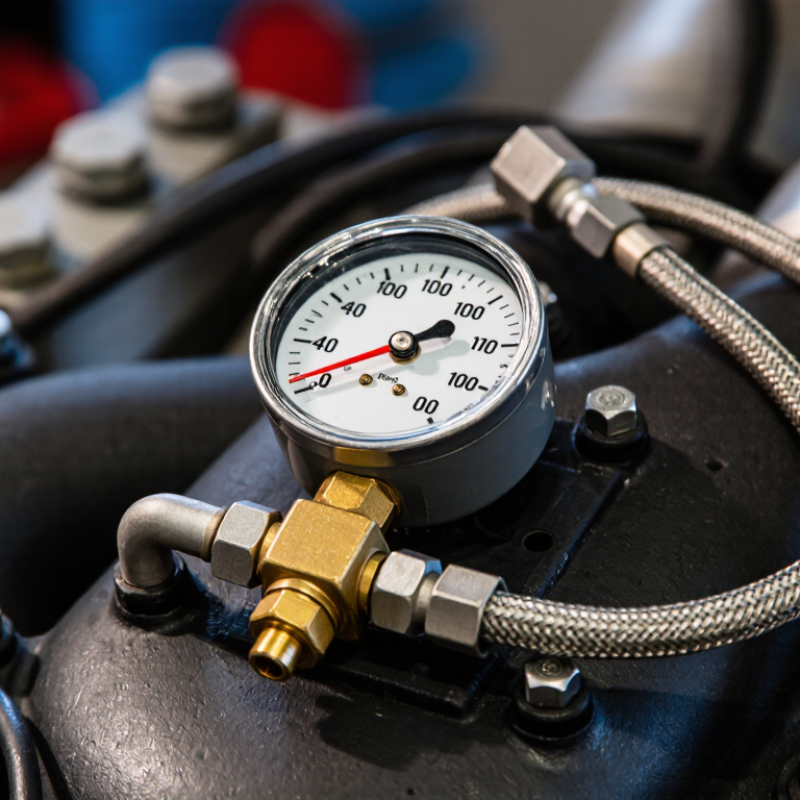
What Is the Best Exhaust Pressure Gauge in 2026?

What Is an Exhaust Pressure Gauge and Why Does It Matter?

An exhaust pressure gauge measures the pressure inside an engine’s exhaust system. It is commonly connected before a turbocharger, filter, or catalytic converter. The gauge reveals how hard exhaust gases must work to leave the engine. Low pressure is generally healthy. Rising pressure can suggest restriction, overheating, poor turbo operation, or a damaged component. The warning may appear before noticeable power loss. That makes the gauge valuable for diagnosis, not decoration.

Tips: Choose a gauge with a suitable pressure range, clear markings, and heat-resistant fittings. Check its calibration regularly. Install the sensor away from extreme heat when possible. Always protect your hands and eyes around hot exhaust parts. A careful technician should inspect connections for leaks before trusting any reading.

The best exhaust pressure gauge in 2026 should provide stable readings and respond quickly to pressure changes. Digital displays can be convenient, while mechanical gauges remain simple and dependable. Accuracy matters more than extra features. Compare readings at idle, under load, and during acceleration. Write them down. Patterns often explain more than one number. A pressure reading alone cannot identify every fault, so it should support temperature checks, visual inspections, and manufacturer service data. Even experienced technicians can misread a gauge when the test setup is poor. That is worth remembering.

How to Compare Exhaust Pressure Gauge Types and Measurement Ranges

What Is the Best Exhaust Pressure Gauge in 2026?

Choosing the best exhaust pressure gauge starts with the measurement task, not the display style. A mechanical Bourdon-tube gauge is simple, durable, and easy to inspect during routine engine checks. It needs no battery. However, vibration can shake the needle and hide small pressure changes. A digital differential gauge usually provides clearer readings, selectable units, and data logging. It may be more useful when comparing pressure before and after a filter, cooler, or turbine.

Measurement range matters more than many buyers expect. For light-duty exhaust testing, a 0–5 psi range can reveal small restrictions with better resolution. Heavy diesel systems may need 0–15 psi or 0–30 psi. Avoid choosing the largest range automatically. A broad scale can make a 1 psi change difficult to see. Check whether the gauge measures gauge pressure, absolute pressure, or differential pressure. These values are not interchangeable.

Temperature resistance is essential. Exhaust tubing near the sensor can become extremely hot, so a remote hose or approved isolator may protect the instrument. Pulsation matters. A damped gauge can produce a steadier reading. Keep it readable. In field testing, I have seen technicians select a perfect range but ignore connection size and hose length. That decision caused delayed readings. It was not a serious failure, but it weakened confidence in the result. Verify accuracy, calibration records, and response time before installation. A practical test at idle and under load can expose problems that specifications miss.

Which Features Define the Best Exhaust Pressure Gauge in 2026?

What Is the Best Exhaust Pressure Gauge in 2026?

The best exhaust pressure gauge should make pressure changes easy to read under real driving conditions. A clear display matters when the cabin vibrates, sunlight reflects, or visibility drops. Large digits and adjustable brightness reduce reading mistakes. A quick response also helps identify sudden backpressure changes before they become expensive problems.

Accuracy remains essential. Look for a gauge with a suitable pressure range, stable calibration, and selectable units such as kPa, bar, or psi. Excessive range can hide small changes. Too little range can overload the sensor. I prefer models with peak-pressure recording and warning alerts because memory often fails during a stressful road test. That said, alerts can become distracting when poorly configured.

Heat resistance separates a durable gauge from a fragile one. The sensor should tolerate the intended temperature environment, while the pressure line needs proper heat shielding. Reliable fittings reduce leaks and unstable readings. Electrical protection, weather resistance, and secure mounting also deserve attention. A compact data-logging function can support maintenance records and professional diagnosis.

Simple installation helps. Very simple is not always better. A gauge without clear calibration instructions may create false confidence. I once underestimated how much vibration affected a loosely mounted display. The reading looked convincing, but the mounting was wrong. Choose documented specifications, replaceable connections, and a design that can be checked against a trusted reference instrument.

How to Select a Gauge for Different Engines and Exhaust Systems

What Is the Best Exhaust Pressure Gauge in 2026?

The best exhaust pressure gauge depends on the engine, measurement point, and expected pressure range. A naturally aspirated engine usually needs a sensitive, low-range gauge. A turbocharged diesel may require a wider range because pressure before the turbine can rise sharply under load. Choose a gauge rated above the highest expected reading, not just the normal reading. A little safety margin matters.

For engines with a turbocharger, measure pressure before the turbine when checking exhaust restriction. Measuring after the turbine can hide a serious problem. Diesel engines with particulate filters need special attention. Their differential pressure system compares readings before and after the filter. A standard single-port gauge may give misleading information. Use heat-resistant tubing, suitable fittings, and a remote-mounted gauge when exhaust temperatures are high. Never place a delicate instrument directly in the exhaust stream.

Small details affect reliability. Pulsing pressure can make the needle shake, so a damped gauge or proper snubber improves readability. Select clear units, such as psi or kPa, and check whether the scale is easy to read from the driver’s seat. Calibration should be verified against a known reference during maintenance. My first gauge choice was too broad, and small pressure changes became difficult to notice. That mistake changed my preference toward the narrowest safe range. Even then, installation quality can matter more than the gauge itself.

What Is the Best Exhaust Pressure Gauge in 2026?

Recommended full-scale pressure range by engine and exhaust system

Select a gauge with a full-scale range slightly above the highest pressure expected in the exhaust system. Naturally aspirated gasoline engines generally need lower-range gauges, while turbocharged gasoline and diesel engines require higher pressure capacity. A gauge with clear graduations, heat-resistant tubing, and an accuracy of approximately ±2% of full scale is suitable for most diagnostic work.

How to Install, Calibrate, and Maintain an Exhaust Pressure Gauge

Choosing the best exhaust pressure gauge in 2026 starts with application, not appearance. Select a gauge with a suitable pressure range, clear markings, and resistance to vibration and heat. A mechanical gauge may suit basic monitoring, while a digital model can record changes more precisely. Always confirm the port size and pressure units before installation.

Install the pressure tap upstream of the restriction you need to measure, often before a turbocharger or particulate filter. Let the engine cool first. Wear eye protection, then use heat-resistant tubing and secure every connection away from moving parts. The line should rise slightly toward the gauge when possible. This helps prevent moisture from collecting inside. Small leaks matter. My first installation used a loose compression fitting, and the readings drifted under load.

Calibration should begin with the engine off and the gauge vented to ambient pressure. The pointer should return to zero. Compare it with a recently verified reference gauge at several pressure points, not only at zero. If readings disagree, inspect the tubing before adjusting the instrument. A restricted line can imitate a calibration problem. Keep it simple. During maintenance, check the face, fittings, tubing, and mounting bracket regularly. Clean soot from the pressure port carefully, because a blocked port can create dangerously low readings. Record test results and replacement dates. A perfect reading is not guaranteed when heat, vibration, and condensation are present, so investigate unusual changes instead of trusting one number.

What Is the Best Exhaust Pressure Gauge in 2026? - How to Install, Calibrate, and Maintain an Exhaust Pressure Gauge

Gauge Type Typical Measuring Range Typical Accuracy Best Use Installation Requirements Calibration Guidance Maintenance Requirements
Mechanical Bourdon-Tube Gauge 0–15 psi (0–100 kPa) or 0–30 psi (0–200 kPa) Approximately ±1.0% to ±2.0% of full scale Routine exhaust backpressure checks, workshop diagnostics, and permanent panel mounting Use a metal exhaust probe and a heat-resistant hose or cooling coil; keep the gauge away from direct exhaust heat Check at zero and at several known pressure points at least annually or after shock, overheating, or suspected drift Inspect the probe, hose, fittings, pointer movement, and zero position; remove soot or condensation from the pressure path
Digital Pressure Gauge Commonly 0–15 psi (0–100 kPa) or 0–30 psi (0–200 kPa) Approximately ±0.25% to ±1.0% of full scale, depending on sensor and temperature Precise testing, peak-pressure recording, data logging, and service work requiring multiple units of measurement Protect the sensor from exhaust heat and condensate; use an isolating tube, snubber, or cooling section when required Verify zero before use and compare readings with a calibrated reference at 25%, 50%, 75%, and 100% of span Replace batteries when needed, inspect the display and seals, and keep the pressure port clean and dry
Differential Pressure Manometer Typically 0–10 inH2O to 0–40 inH2O (2.5–10 kPa) Approximately ±0.5% to ±2.0% of full scale Comparing pressure before and after a diesel particulate filter, catalyst, muffler, or other restriction Connect the high and low ports to separate test points; use condensate traps and protect both lines from excessive temperature Zero both ports with equal pressure, then verify the differential reading against a reference source Check both hoses for leaks, blockage, kinks, and unequal lengths; drain accumulated moisture before storage
Electronic Pressure Sensor with Data Logging Range selected according to the engine; 0–100 kPa is common for backpressure testing Approximately ±0.5% of full scale for a properly matched system Fleet testing, transient pressure analysis, emissions-system diagnosis, and comparison of pressure under different loads Install a heat-resistant pressure line, pulsation damper, and secure electrical connections; avoid routing near ignition or high-voltage wiring Perform a two-point or multi-point calibration using a traceable reference and record date, temperature, and test pressure Inspect cables, connectors, protective filters, memory capacity, and time settings; download and back up test records
High-Temperature Remote-Mount Gauge System Usually 0–15 psi (0–100 kPa) for engine exhaust diagnostics Approximately ±1.0% to ±2.0% of full scale Continuous or repeated testing where the gauge must remain in a cool, visible location Use a threaded exhaust sampling port, metal probe, cooling coil, and flexible line; mount the gauge away from radiant heat and vibration Confirm zero after the system cools and test the complete probe-and-line assembly for leaks before calibration Inspect high-temperature components for discoloration, cracks, loose fittings, and carbon deposits at every service interval
Recommended selection criteria: Choose a pressure range that places normal readings near the middle of the scale, use a gauge with accuracy suitable for the diagnostic task, and select a remote or cooled installation whenever exhaust temperature may exceed the gauge or hose rating.
Installation and safety note: Allow the exhaust system to cool before drilling or removing plugs. Use suitable thread sealant, wear heat-resistant gloves and eye protection, secure the test line away from moving parts, and never connect a standard gauge directly to hot exhaust gas unless its temperature rating and installation method permit it.