
Who Is the Best PET Clear Tape Supplier in China?

Choosing the best PET Clear Tape supplier in China takes more than comparing prices or browsing polished product photos. A reliable choice depends on consistent film clarity, stable adhesive performance, accurate slitting, and communication that holds up after an order is placed. These details become visible in ordinary work: a roll unwinds smoothly, the tape stays clear on a carton, and its edge does not curl during storage. Small details matter. Yet no single supplier is best for every buyer. Packaging lines, stationery brands, and industrial users may need different widths, thicknesses, tack levels, and packing formats.

This guide explores how to assess suppliers with practical, verifiable questions. Ask for technical data sheets, sample rolls, and clear explanations of PET film and adhesive options. Compare samples under your own conditions, including temperature, surface type, and storage time. A quick hand test is useful, but it is not enough. Check whether the supplier can document production capacity, inspection steps, lead times, and customization limits. Photos and certificates can help, though they should not replace direct checks. Be cautious of unusually low quotes that omit core specifications or freight details. A supplier may communicate well before payment and still disappoint later; that possibility deserves honest attention. The aim is not to crown a name without evidence, but to identify a partner whose claims match the material delivered. With a measured review, buyers can make a more confident choice and avoid costly surprises.
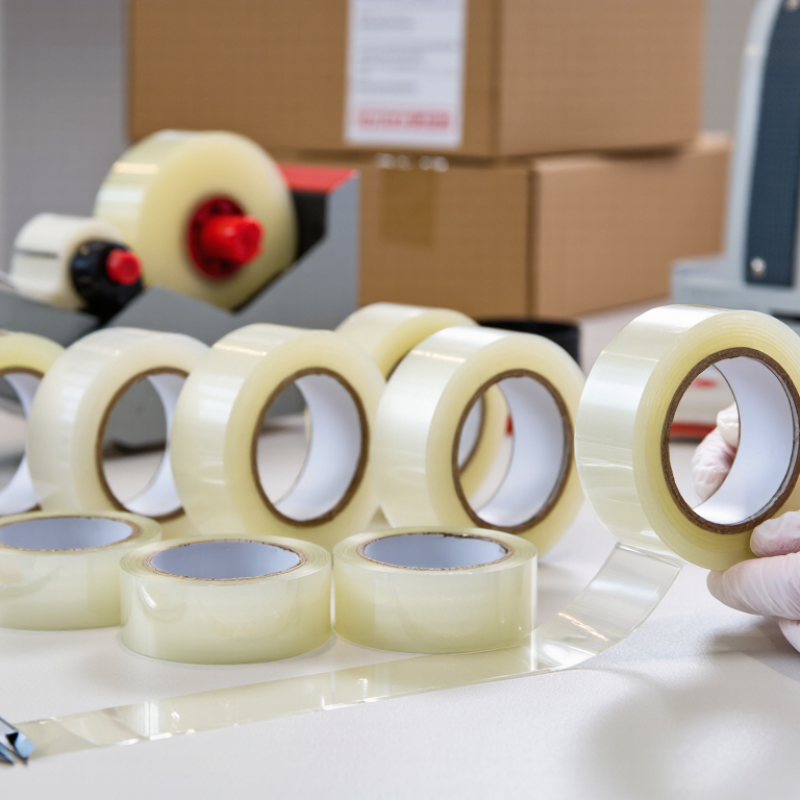
Who Is the Best PET Clear Tape Supplier in China?

What Is PET Clear Tape and Where Is It Used?

PET clear tape is a pressure-sensitive tape made with a transparent polyester film backing and an adhesive layer. The film is usually thin, smooth, and more dimensionally stable than many basic plastic films. It helps the tape stay clear and hold its shape during handling. Adhesive type and thickness vary, so performance depends on the exact product.

This tape is used for sealing light packages, bundling small items, holding labels, and joining materials during converting or assembly. In workshops, a narrow strip can secure a paper template to a clean surface without hiding the marked lines. Some versions are designed for electrical insulation or high-temperature processes, but ordinary clear tape should not be assumed suitable for those jobs. It is not a cure-all. Surface cleanliness, temperature, and application pressure can all affect adhesion.

Tips: Check the tape’s technical data sheet for adhesive type, temperature range, and recommended surfaces. Test a small area before applying it to delicate finishes or printed materials. Look closely at the edge after application; trapped dust can create a visible line. Clear does not always mean invisible.

What Qualities Define a Reliable Chinese PET Tape Supplier?

A reliable Chinese PET clear tape supplier can explain how film thickness, adhesive type, and release liner affect the finished roll. Samples should look clear under ordinary workshop lighting, without cloudy bands, trapped dust, or uneven edges. Ask for tolerances, not just a headline thickness. Small details matter.

Adhesion needs to fit the job. Tape for splicing, insulation, or surface protection may require different tack, peel strength, and temperature resistance. Request test data and the method used. A number without conditions is hard to compare. Check unwind by hand: steady tension, clean release, and no adhesive transfer are useful signs, though not proof on their own.

Good suppliers keep batch records, inspect incoming materials, and explain how defects are handled. Ask whether production samples match bulk orders and how changes are communicated. Clear answers beat polished promises. A specification sheet cannot replace a trial on your surface, at your working speed, and under your storage conditions. Run that trial. A short sample test may still miss variation across a full production run, so confirm quality again when the order arrives.

How Can Buyers Compare Suppliers and Product Specifications?

Buyers should compare PET clear tape by measurable performance, not by a supplier’s “premium” label. Request film thickness, total thickness, peel adhesion, tensile strength, elongation, haze, and unwind force. Ask which test methods were used. ASTM D3330 measures peel adhesion, while ASTM D3759 covers tensile strength and elongation. Results are useful only when sample width, test speed, and conditioning are consistent.

Check each specification against the job. A carton-sealing line may need steady unwind and reliable adhesion on dusty corrugated board; electronics assembly may demand low haze and clean removal. Request technical data sheets, batch certificates, and samples from multiple production lots. Test them on the actual substrate and applicator. A neat lab result can still fail on a cold, rough carton.

Material claims deserve scrutiny, too. The OECD’s 2022 Global Plastics Outlook estimates that global plastic production reached 460 million tonnes in 2019, while only 9% of plastic waste was recycled. That figure covers plastics broadly, not PET tape specifically. Ask suppliers for clear evidence of recycled content, film origin, and lot traceability. Small detail. Compare lead time, defect handling, and specification tolerances in writing; I would not treat an unverified “eco” claim as a buying criterion.

Which Chinese Suppliers Meet Common Buyer Requirements?

Buyers comparing Chinese PET clear tape suppliers should look beyond a low quoted price. A dependable supplier can explain film thickness, adhesive type, roll width, length, and core size in plain terms. Ask for a technical data sheet and a sample made to the same specification. Small details matter. Tape that looks clear under office lighting may show haze or uneven edges on a backlit package.

Check how the supplier controls consistency. Request thickness measurements and information about unwind behavior, plus records from a recent batch. Ask whether adhesive performance changes with temperature, storage time, or the surface being sealed. Test it. Use your actual cartons or substrates, not just a hand test. A clean peel is useful, but it does not prove long-term adhesion.

Communication and order handling are part of product quality. Confirm minimum order quantity, lead time, packaging, slitting tolerance, and how defects are recorded before placing a bulk order. A responsive contact helps, yet written specifications matter more when staff or schedules change. Some suppliers may offer polished samples and still struggle with repeat consistency; discuss that risk openly. Compare qualified factories with the same checklist, and keep a retained sample for later checks.

How Should Buyers Verify a Supplier Before Ordering?

A supplier’s website can look convincing. That is not enough. Before ordering PET clear tape, ask for a current technical data sheet showing film thickness, adhesive type, total thickness, and temperature range. Check that quoted values match the product you plan to buy, not a similar grade. Ask how batch numbers are recorded and whether inspection reports can be linked to a production lot.

Request samples from the actual production line, if possible. Apply the tape to clean glass, coated metal, and cardboard, then check adhesion after a set period. Look for haze, bubbles, uneven edges, and residue after removal. A quick test helps, but it cannot predict every storage or application condition. We sometimes trust a small sample too much; repeat testing across more than one roll when consistency matters.

Ask how the supplier handles complaints, replacement requests, and changes to specifications. A clear written answer is useful. So is a video call showing coating, slitting, and packing areas, though a brief tour is not a full audit. Confirm roll width, length, core size, packaging, lead time, and payment terms on the purchase order. Keep the approved sample and written specifications for comparison when the shipment arrives.