
What Is the Best SMT Equipment to Buy in 2026?
Choosing the best Smt Equipment to buy in 2026 starts with the boards your factory actually builds. A fast pick-and-place machine may look impressive, yet bottlenecks can hide in feeder changeovers, stencil printing, reflow, or inspection. The right line depends on product mix, board size, component range, target output, and staffing. Small details matter. A misfit nozzle or slow recipe change can cost real production time.
Industry reports offer context, not a shopping list. IFR’s World Robotics 2024 report recorded 4,281,585 industrial robots operating worldwide in 2023, a 10% increase from 2022. That signals growing automation, but it does not measure SMT line demand directly. SEMI reported global semiconductor equipment sales of $117.1 billion in 2024; this reflects chip-fabrication investment, not PCB assembly equipment purchases. Buyers should keep that distinction clear. These figures show a wider move toward automation and capacity investment, but they cannot tell you which machine will suit your plant.
For a practical comparison, examine verified placement performance on your actual components, changeover time, inspection coverage, software compatibility, and local service response. Request a product trial using representative boards. Check spare-part availability and training costs, not only the purchase price. A vendor’s headline speed may depend on ideal conditions. And forecasts can miss. Before committing, compare total ownership costs with the output and quality targets your team can realistically sustain. No single machine wins every line; the best investment is the one that fits your process, with room for honest reassessment.
Understanding SMT Equipment and Its Role in Electronics Manufacturing
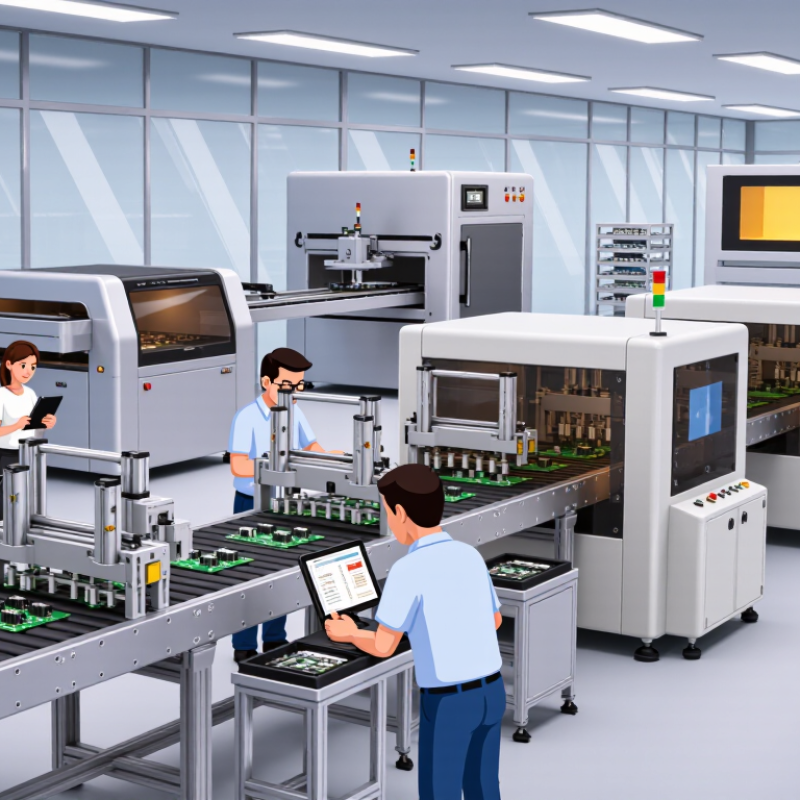
Surface-mount technology (SMT) places electronic components directly onto printed circuit boards. An SMT line is not one machine. It is a connected process, from solder paste application to component placement, heating, and inspection. Each stage affects the next. A slightly uneven paste deposit can cause defects that appear only after the board leaves the reflow oven.
A stencil printer applies paste through tiny openings in a metal stencil. A pick-and-place machine then uses feeders and nozzles to position components, often guided by board fiducials. The reflow oven follows a thermal profile that melts solder without overheating sensitive parts. Inspection equipment can flag misplaced components or solder issues, but it cannot replace sound process setup. That matters. Operators still need to review results and investigate recurring faults.
When comparing equipment in 2026, consider the boards you actually build, not just headline speed. Check component range, changeover time, available floor space, software compatibility, and service support. A fast placement machine may sit idle if printing or inspection becomes the bottleneck. Ask suppliers for a trial using representative boards and measure defects, throughput, and setup time. Small details count. Even a well-matched line needs calibration, maintenance, and skilled operators. The right purchase is not always the newest machine; sometimes, the less obvious gap in the process deserves attention.
What Is the Best SMT Equipment to Buy in 2026? — Understanding SMT Equipment and Its Role in Electronics Manufacturing
| Equipment | Role in SMT Manufacturing | Key Buying Criteria | Best Fit | Priority for 2026 |
|---|---|---|---|---|
| Solder paste printer | Applies solder paste to printed circuit boards through a stencil before component placement. | Assess print repeatability, stencil alignment, supported board sizes, changeover time, cleaning options, and compatibility with the required paste and stencil processes. | Most SMT lines; particularly important when paste-print quality is a major source of defects. | High: A consistent print process supports reliable downstream placement and soldering. |
| Solder paste inspection (SPI) system | Measures printed solder paste deposits, helping detect issues such as insufficient, excessive, or misaligned paste before components are placed. | Compare measurement coverage, inspection speed, repeatability, recipe setup, data reporting, and integration with the printer and line-control systems. | Lines seeking earlier process feedback, especially those producing fine-pitch or high-mix assemblies. | High: Early detection can reduce the cost of defects found later in production. |
| Pick-and-place machine | Places surface-mount components onto solder-pasted boards. | Match component range, placement accuracy, feeder capacity, nozzle availability, board handling, programming workflow, changeover needs, and verified throughput to the product mix. | Every automated SMT line; the right configuration depends on component variety and production volume. | High: Prioritize the actual product mix and usable line output over headline placement-speed figures. |
| Reflow soldering oven | Heats assemblies through a controlled thermal profile to form solder joints. | Review heating zones, temperature uniformity, profile control, conveyor width and speed, cooling capability, energy use, maintenance access, and recipe storage. | Lines using solder-paste reflow for board assembly. | High: Stable thermal control is essential for repeatable soldering across the assembly. |
| Automated optical inspection (AOI) | Uses cameras and inspection software to identify visible assembly and soldering defects. | Check inspection coverage, false-call handling, programming effort, defect-library workflow, traceability, and integration with manufacturing data systems. | Production lines that need consistent inspection and documented quality results. | High: Select inspection capability around the defects and board features that matter to the product. |
| X-ray inspection system | Inspects hidden solder joints and internal features that are not visible to optical inspection, such as joints beneath certain package types. | Evaluate required inspection applications, image quality, sample or production throughput, operator training, safety controls, and local compliance requirements. | Assemblies with hidden joints or other inspection needs that cannot be met by optical methods alone. | Application-dependent: Buy when product design or quality requirements justify internal inspection. |
| Board loaders, unloaders, and conveyors | Move boards between process stations and support loading, unloading, buffering, and line flow. | Confirm board dimensions, conveyor width, transfer height, line communication, buffer capacity, changeover, and compatibility with existing machines. | Lines being automated, expanded, or reconfigured. | Medium to high: Correct material handling helps prevent bottlenecks and unnecessary manual transfers. |
| Feeder and nozzle inventory | Supplies components and supports component pickup for placement machines. | Check compatibility with the placement platform, component packaging formats, feeder condition, spare availability, setup controls, and inventory tracking. | Any line where component variety, changeover time, or equipment uptime is important. | High for mixed production: Include the required feeders, nozzles, and spares in the total equipment plan. |
| Line software and traceability tools | Help manage programs, production data, machine status, inspection results, and board or lot traceability. | Verify machine connectivity, data formats, user permissions, recipe control, reporting, cybersecurity practices, and integration with existing factory systems. | Manufacturers managing multiple products, process data, or customer traceability requirements. | Medium to high: Confirm interoperability before purchase rather than assuming all equipment shares data seamlessly. |
| Stencil and process-support equipment | Supports stencil handling and cleaning, solder-paste storage and preparation, and repeatable setup practices. | Consider cleaning method, stencil range, paste handling procedures, operator workflow, consumables, and applicable safety requirements. | Lines establishing or improving control of the printing process. | Medium: Include supporting tools and procedures in the process budget, not just the main production machines. |
Buying principle: There is no single best SMT equipment package for every factory. Base the 2026 purchase on product mix, required quality controls, board dimensions, expected usable capacity, staffing, facility constraints, service availability, and total cost of ownership. Validate performance with representative boards and real production programs before committing.