
China Top 10 FIBC Types and Quality Control Suppliers
China’s FIBC industry supports agriculture, chemicals, food ingredients, minerals, and construction materials worldwide. Demand is rising for safer, cleaner, and more traceable bulk packaging. Grand View Research’s Flexible Intermediate Bulk Container Market Size, Share & Trends Analysis Report identifies industrial expansion and logistics efficiency as major market drivers. Future Market Insights also highlights growing demand for customized FIBC designs, especially for hazardous and sensitive materials.
Quality is not judged by appearance alone. A reliable supplier checks fabric weight, tensile strength, seam integrity, lifting-loop performance, UV resistance, and electrostatic properties. ISO 21898 provides recognized requirements for flexible intermediate bulk containers, including construction, testing, and performance considerations. These controls matter when a one-ton bag is lifted above a factory floor or transported across long distances.
China offers many FIBC manufacturers, but factory capability can vary significantly. This guide reviews the China Top 10 FIBC Types and Quality Control Suppliers through practical criteria, including production experience, testing equipment, certifications, material control, and export records. The China Leading Fibc Quality Control Supplier should provide batch traceability, inspection records, and clear corrective-action procedures.
No supplier is flawless. A polished website cannot replace test evidence. Even a strong factory may show weaknesses in documentation, sampling, or communication. Buyers should verify current certificates, inspect production lines, and request independent testing when risks are high. This approach may slow purchasing decisions, but it reduces costly surprises. The final selection should reflect the product’s actual filling method, load weight, storage conditions, and transport route.
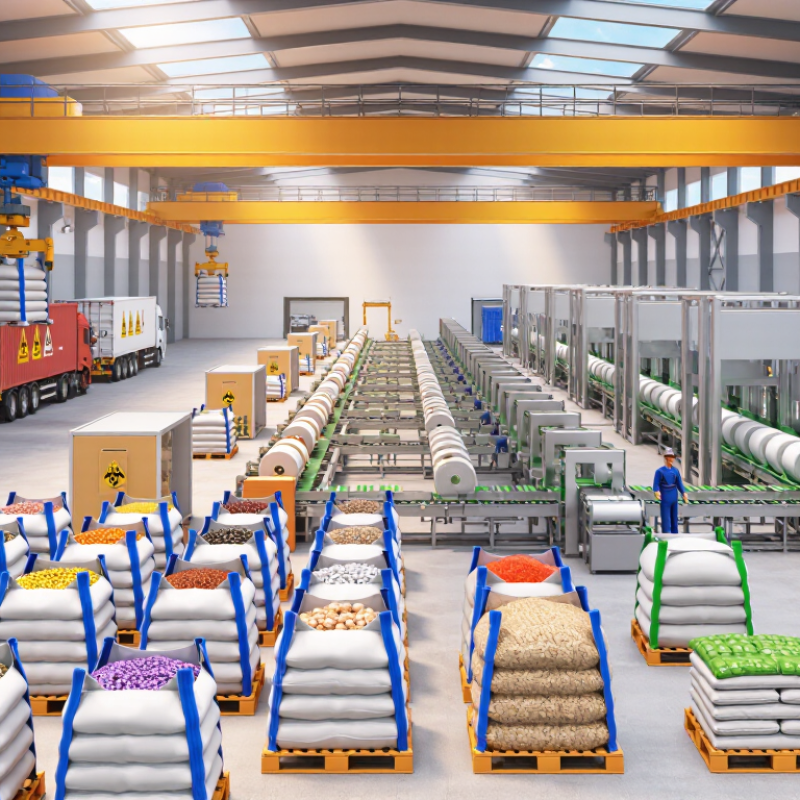
Understanding FIBCs and Their Main Industrial Applications
China’s FIBC industry supplies many bag designs for different industrial conditions. Standard four-panel and U-panel bags handle common powders and granules. Circular bags reduce seams and can improve material flow. Baffled bags keep a square shape during storage, saving warehouse space.
Conductive and antistatic FIBCs support operations where static control matters. Ventilated bags help agricultural products release heat and moisture. Food-contact bags require controlled materials, clean production areas, and documented hygiene procedures. Sift-proof seams reduce leakage during transport. UN-tested designs may serve regulated hazardous-material applications when certification and local requirements are fully met.
These bags support agriculture, food processing, chemicals, minerals, construction materials, and waste handling. A practical quality inspection should verify fabric weight, coating, seam strength, lifting-loop performance, safe working load, and safety factor. Drop tests and compression tests reveal weaknesses that visual checks can miss. Production records should connect each batch with raw materials, operators, and inspection results.
No inspection system is flawless. Small stitching variations still deserve attention. Buyers should request samples, test reports, loading instructions, and traceable quality records from Chinese suppliers. Factory audits can confirm sewing conditions, storage practices, and worker procedures. In my experience, the cheapest quotation often hides inconsistent fabric or rushed seams. A better decision compares performance, documentation, application risk, and long-term handling costs.
China Top 10 FIBC Types and Quality Control Suppliers - Understanding FIBCs and Their Main Industrial Applications
| No. | FIBC Type | Main Construction | Typical Industrial Applications | Typical Safe Working Load | Key Quality-Control Checks | Relevant Standards or Requirements |
|---|---|---|---|---|---|---|
| 1 | Type A Standard FIBC | Woven polypropylene fabric without electrostatic protection | Non-flammable powders, grains, minerals, construction materials and agricultural products | Usually 500–2,000 kg, depending on design and certification | Fabric denier, seam strength, lifting-loop strength, dimensions, load testing and visual inspection | ISO 21898; use only where no static hazard is present |
| 2 | Type B FIBC | Insulating woven fabric with controlled breakdown voltage | Dry combustible powders transported in areas with limited electrostatic risk | Commonly 500–2,000 kg | Surface resistivity, breakdown voltage, fabric continuity, grounding instructions, seam and load tests | IEC/TS 61340-4-4; combustible-dust risk assessment required |
| 3 | Type C Conductive FIBC | Conductive threads or tapes in a grid pattern that must be grounded | Flammable powders, solvents, pharmaceutical ingredients and hazardous industrial materials | Often 500–2,000 kg | Resistance-to-ground, grid continuity, grounding-point integrity, stitching, lifting tests and bag identification | IEC/TS 61340-4-4; grounding is mandatory during filling and discharge |
| 4 | Type D Dissipative FIBC | Static-dissipative fabric designed to control electrostatic discharge without a separate earth connection | Flammable powders and dust-handling operations where grounding may be difficult | Typically 500–2,000 kg | Surface resistance, electrostatic discharge performance, contamination control, seam strength and drop testing | IEC/TS 61340-4-4; selection must match the assessed ignition risk |
| 5 | Baffle FIBC | Standard body with internal baffles sewn between panels to improve shape retention | Warehouse storage, palletized transport, food ingredients, chemicals and powders requiring efficient space use | Commonly 500–2,000 kg | Baffle alignment, panel dimensions, cubic capacity, seam quality, filling stability and stacking performance | ISO 21898; food-contact or chemical requirements may apply |
| 6 | UN-Certified FIBC | FIBC tested and marked for applicable dangerous-goods packaging requirements | Certain hazardous solids, including regulated chemical powders and contaminated materials | Specified by the approved UN design type; not determined by capacity alone | Drop test, topple test, righting test, stacking test, seam inspection, traceability and marking verification | UN Recommendations on the Transport of Dangerous Goods; applicable national transport rules |
| 7 | Food-Grade FIBC | Clean, controlled polypropylene construction with suitable liners or coatings when required | Flour, sugar, starch, grains, spices, dairy powders and other dry food ingredients | Usually 500–1,500 kg | Migration testing, odor and taste assessment, hygiene controls, foreign-body prevention, cleanliness and lot traceability | Applicable food-contact regulations, HACCP-based controls and customer hygiene specifications |
| 8 | UN-Lined or Coated FIBC | Woven body with polyethylene liner, lamination or internal coating for improved containment | Fine powders, pigments, cement, resins, minerals and moisture-sensitive materials | Commonly 500–2,000 kg | Liner thickness, pinhole inspection, seal integrity, coating adhesion, moisture resistance and discharge performance | ISO 21898; liner and coating requirements should be specified by product compatibility |
| 9 | Ventilated FIBC | Woven body incorporating ventilation strips or breathable fabric sections | Fresh produce, potatoes, onions, firewood and materials requiring airflow | Often 500–1,500 kg, depending on product density | Air-permeability testing, ventilation-area consistency, stitching, moisture management, load testing and cleanliness | ISO 21898; product-specific ventilation and agricultural handling requirements |
| 10 | One-Trip and Reusable FIBC | One-trip design for controlled use, or multi-trip design validated for repeated handling | Bulk logistics, recycling, waste handling, chemicals, minerals and industrial raw materials | Approximately 500–2,000 kg | Safe working load, safety factor, cyclic testing for reusable bags, abrasion, UV exposure, stitching and inspection records | ISO 21898; reusable bags require documented inspection and lifecycle criteria |