
7 Tips for Choosing a New Energy Car Production Line
Choosing a New Energy Car Production Line is a major investment, not simply a purchase of robots and conveyors. The right system must match the vehicle design, production targets, available space, and plans for future models. Battery-module handling, body welding, paint, final assembly, and end-of-line testing all need careful coordination. A small mismatch can cause recurring delays.
Elon Musk has expressed a useful manufacturing principle: “The machine that builds the machine is vastly more important than the machine itself.” For buyers, that means evaluating the whole production system, not just its headline speed. Ask how equipment changes between models, how quality checks are recorded, and what support is available when a station stops. Request clear cycle-time assumptions and a practical commissioning plan. Numbers on a proposal may look precise; real factories are less tidy.
This guide presents seven tips for comparing suppliers and assessing production-line readiness. It covers capacity, automation, flexibility, quality control, energy use, integration, and after-sales support. The details matter. So do the gaps in the plan. Even a careful checklist cannot predict every disruption, and that deserves honest attention. A well-chosen line should meet today’s needs while leaving room for change.
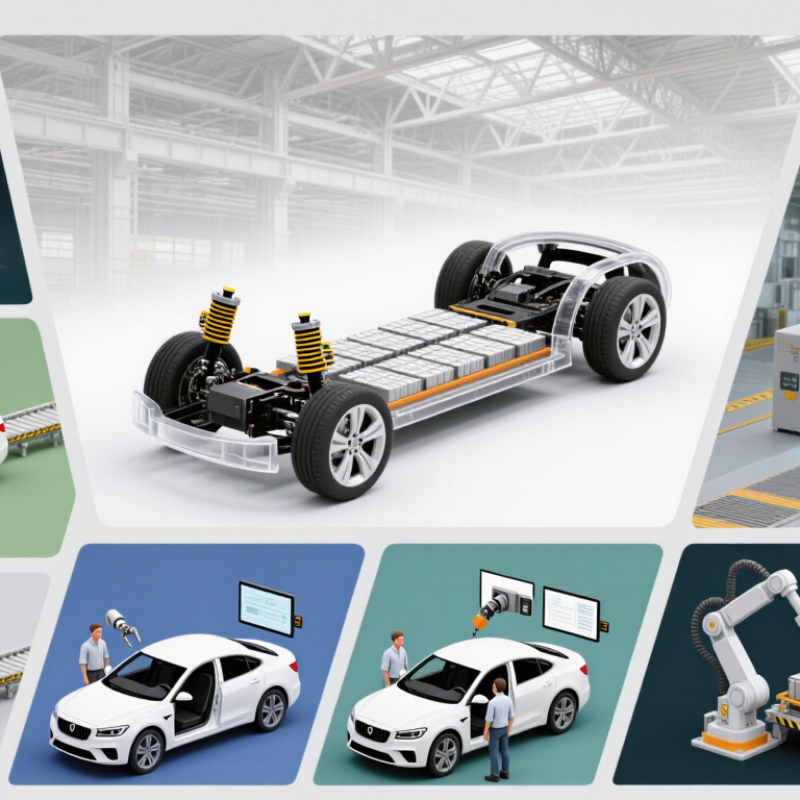
Understand Production Goals and Vehicle Requirements
A production line should be designed around a defined production goal, not a headline capacity figure. Specify annual output, planned shifts, ramp-up timing, and the expected mix of vehicle models. The International Energy Agency’s Global EV Outlook 2024 reports nearly 14 million electric cars sold worldwide in 2023, about 18% of all car sales. It projected sales of around 17 million in 2024. Forecasts are not promises. Use them to test scenarios, then size equipment against realistic orders and supply constraints.
Vehicle requirements shape the line itself. Record battery chemistry and pack dimensions, vehicle weight, body structure, charging targets, and the number of platform variants. These details affect battery assembly, joining methods, material handling, and end-of-line testing. The IEA also reports that electric-vehicle battery demand exceeded 750 GWh in 2023, rising about 40% year over year. That points to scale, but not to one universal factory layout. A line built for several pack sizes may need adjustable fixtures and extra changeover time. Small detail, big consequence. Teams sometimes lock specifications too early; revisiting them can delay equipment orders, but skipping that review risks costly rework. Define acceptance tests before commissioning, including pack sealing, electrical checks, and traceability at each station.
7 Tips for Choosing a New Energy Car Production Line — Understand Production Goals and Vehicle Requirements
Estimated annual output at three line takt times
Estimates assume two 8-hour shifts per day, 250 operating days per year, and 85% effective operating time. Choose a target takt time based on annual production goals, planned model mix, and vehicle-specific needs such as battery-pack installation and variant flexibility. Actual output depends on line design and operating conditions.
Assess Battery, Powertrain, and Assembly Capabilities
A new energy car line should be assessed around its battery process, powertrain testing, and final assembly—not just its headline capacity. The IEA’s Global EV Outlook 2024 reports that battery demand for electric vehicles exceeded 750 GWh in 2023, rising by about 40% year over year. That scale makes stable cell handling and in-line inspection essential. Ask whether the line can detect coating defects, manage temperature-sensitive materials, and record test results by pack. Small defects matter.
Powertrain capability needs more than a motor installation station. Check for end-of-line tests covering motor output, inverter behavior, software calibration, and thermal performance. Test stations should reproduce real operating loads, not only run a brief pass-or-fail check. The IEA’s report also documents rapid growth in EV production and battery demand, so equipment changeover deserves attention. Can the line accommodate different motor or battery configurations without extensive rebuilding? A weak answer can hide future downtime.
Assembly capability shows up in details: torque tools with traceable records, clear routing for high-voltage components, and fixtures that prevent connectors from being forced into place. The International Federation of Robotics reported 541,302 industrial robots installed worldwide in 2023, showing how common automation has become. But automation alone proves little. One uncomfortable point: a highly automated line still needs a workable plan for reinspection and rework. Ask to see the process, not just the equipment list.
Compare Automation, Flexibility, and Production Capacity
Compare automation at each station, not only by the number of robots. A highly automated line may reduce repetitive handling, yet one stalled conveyor can stop several downstream processes. Ask for cycle-time data from a representative production mix, including battery-pack installation and final inspection. Watch a live shift if possible. The small pauses matter.
Flexibility shows up during changeovers. Check how long fixtures, software settings, and material feeds take to switch between vehicle variants. Ask whether operators can adjust a station safely without specialist support. A line that handles many configurations on paper may still need lengthy retooling. Request a changeover demonstration, not just a specification sheet.
Judge capacity at the bottleneck, not by the fastest station’s advertised output. Compare planned hourly volume with actual shift patterns, maintenance windows, and expected product mix. Ask how the line behaves when a test station rejects a unit or a component arrives late. Review staffing and service requirements alongside machine speed. Leave room for growth, but avoid buying capacity the facility cannot use. One forecast can be wrong. Check the assumptions against current orders and floor space.
7 Tips for Choosing a New Energy Car Production Line — Compare Automation, Flexibility, and Production Capacity
Use this comparison guide to assess production-line proposals. Capacity figures below are planning examples, not guaranteed output; actual results depend on product mix, line balance, staffing, downtime, and validation.
| Tip | Dimension to Compare | What to Check | Useful Planning Data | Questions for Suppliers |
|---|---|---|---|---|
| 1. Define required capacity | Line rate and annual output | Compare sustained good units per hour, not just the fastest demonstrated cycle. Identify the bottleneck process and planned operating shifts. | Illustration: at 30, 50, or 60 units/hour, two 8-hour shifts, 250 operating days, and an assumed 80% OEE, calculated annual output is approximately 96,000, 160,000, or 192,000 units, respectively. | What assumptions are used for shifts, breaks, changeovers, planned maintenance, scrap, and OEE? Is the quoted rate demonstrated across the full line? |
| 2. Match automation to the process | Automation level | Review automated handling, joining, dispensing, inspection, and traceability separately. Prioritize automation where it improves repeatability, ergonomics, safety, or cycle time. | Automation should be specified by station and task. A line can combine manual, semi-automated, and automated operations; a single “automation percentage” does not describe capability or labor needs reliably. | Which operations are automated? What staffing is required per shift, and what skills are needed for operation, recovery, and maintenance? |
| 3. Test product-mix flexibility | Vehicle and battery-platform variation | Check whether the line can accommodate planned body styles, pack sizes, wheelbases, and process variants without disrupting takt time. | Request a documented product-variant matrix showing station limits, tooling requirements, software changes, and any operations that remain product-specific. | Can variants run in mixed sequence? Which changes require new fixtures, reprogramming, or line stoppage? |
| 4. Measure changeover effort | Changeover time and frequency | Compare the time, labor, tools, and production loss required to switch between models, battery configurations, or process recipes. | There is no universal changeover-time benchmark: the result depends on the product, tooling, and changeover definition. Require a timed changeover demonstration using representative products. | Does the quoted time include adjustment, verification, first-piece approval, and return to stable production? |
| 5. Check battery-process safety and quality | Battery handling, joining, and inspection | Review controls for lifting and positioning packs, electrical isolation, fastening or joining processes, process monitoring, and abnormal-condition response. | Define measurable acceptance criteria for each critical operation, such as fastening parameters, leak-test limits where applicable, inspection coverage, and electronic process records. | How are process limits enforced, faults contained, and battery or vehicle serial numbers linked to inspection and production records? |
| 6. Evaluate uptime and maintenance | Availability, recovery, and support | Assess equipment availability assumptions, spare-parts strategy, diagnostic access, planned maintenance, and recovery time after common faults. | OEE combines availability, performance, and quality. Compare proposals only when the measurement boundaries, production period, exclusions, and calculation method are consistent. | What uptime evidence is available from comparable processes? Which components are critical, and what recovery and spare-parts plans are included? |
| 7. Plan for expansion and integration | Scalability, footprint, and data integration | Check whether the layout, utilities, controls, material flow, and production-data systems can support future volume increases or added variants. | Request a current-state and expansion layout, utility-load schedule, interface list, and capacity model identifying the next bottleneck after an upgrade. | Can capacity be added in stages? What floor space, utility changes, software interfaces, and production downtime would each stage require? |
Capacity calculation note: The examples use hourly rate × 16 scheduled hours/day × 250 operating days/year × 80% assumed OEE. Replace these assumptions with the facility’s actual shift calendar and a validated line-specific performance model before making an investment decision.
Evaluate Safety, Quality Control, and Regulatory Compliance
A production line for new energy vehicles should make hazards visible, not merely keep the floor tidy. During a site visit, watch how workers handle battery modules, isolate equipment, and respond to alarms. Ask to see emergency-stop checks and maintenance records. Small gaps matter. A sensor that is bypassed during a busy shift can undermine an otherwise careful safety plan. Review whether risk assessments cover normal production, rework, and equipment changes.
Quality control needs evidence at each critical step. Check how the line records torque values, electrical tests, and battery-pack inspection results. Can a team trace one finished vehicle back to its components and process settings? Ask how failed parts are quarantined and how recurring defects trigger corrective action. A dashboard may look polished, but sample records reveal more. I would not rely on a single successful demonstration; real shifts are less predictable.
Regulatory compliance should be checked against the vehicle category and markets the line is intended to serve. Request a clear map of applicable requirements, test responsibilities, and document owners. Confirm that calibration certificates, inspection logs, and change-control records stay current. Independent review can expose gaps before equipment is ordered. The paperwork is easy to underestimate. It also deserves regular updates, especially when materials, software, or production methods change.
Review Supplier Support, Lifecycle Costs, and Expansion Options
Supplier support should be tested before a production-line contract is signed. Ask who responds when a cell-assembly station stops at 2 a.m., how quickly critical parts arrive, and whether technicians can diagnose faults remotely. Request service-level terms, training plans, spare-parts lists, and references from comparable factories. Then check the details yourself. A polished presentation is not proof of dependable support.
Lifecycle cost is more than the purchase price. Include commissioning, energy use, software updates, maintenance labor, tooling changes, and planned downtime in the comparison.
That growth makes future capacity planning practical, not theoretical. Compare suppliers’ expansion options: spare floor space, compatible controls, and line modules that can be added without rebuilding the plant. Measure the cost of each option against realistic volume forecasts. A spreadsheet can still miss awkward changeovers or training delays; visit a running facility and watch a shift change. Small details matter. I would also challenge optimistic uptime estimates: real production rarely follows a perfect curve. Include a slower ramp-up scenario before approving the investment.