How to Choose a Professional 3D Printer for Your Business?
Choosing the right Professional 3D Printer for your business can be daunting. With numerous options on the market, it’s crucial to consider your specific needs. A good printer should match your production goals and material requirements.
Quality and precision are essential. Look for machines that offer high resolution and durability. Understanding different technologies, like FDM and SLA, plays a significant role. Each has strengths and weaknesses that may affect your workflow.
Don’t overlook customer support and reliability. A trusted brand often provides better service and resources. Investing in a Professional 3D Printer is a significant decision. Reflect on your long-term objectives and budget. The right choice can elevate your operations and drive innovation.
Understanding Your Business Needs for 3D Printing Solutions
When selecting a professional 3D printer, it is essential to understand your business's specific needs.
The 3D printing market is projected to grow to $34.8 billion by 2024, according to a report by MarketsandMarkets.
This growth reflects a wide range of applications across various industries, from prototyping to production.
Identifying your primary use case can help focus your search.
Consider what materials you will require.
Different printers work better with certain materials, whether plastics, metals, or ceramics.
An annual report from Wohlers Associates indicates that about 20% of companies prioritize material versatility in their purchase decisions.
Evaluate your expected print volume as well.
If your business anticipates high demand, a printer with better speed and reliability might be crucial.
Some businesses underestimate the importance of support and maintenance services, often finding vendors lacking when issues arise.
Lastly, factor in the long-term costs.
Initial purchase price is only part of the equation.
Operating expenses, such as material costs and energy consumption, can add up.
A poor choice may result in significant overhead, impacting profitability.
Stay informed about industry standards and user reviews to navigate this complex landscape effectively.
Understanding your precise needs will guide your decision, aiding in investment that aligns with your business goals.
Key Features to Consider in Professional 3D Printers
When selecting a professional 3D printer, understanding the crucial features is essential. Print quality is a top priority. High resolution ensures fine details in prototypes and final products. A printer with a larger build volume allows for bigger designs. This can be particularly beneficial for businesses needing larger components or designs.
Material compatibility is another vital aspect to consider. Some printers accept various materials, enabling you to experiment with different finishes and functionalities. Ease of use is important too. Intuitive software can save time during setup and operation. Consider models that allow for easy maintenance. Frequent issues can hinder production, so reliability is key.
Finally, support and community around the printer matter. Access to a knowledgeable support network can help troubleshoot issues quickly. Online communities can provide valuable insights and tips from other users. These factors contribute significantly to making an informed decision. Balancing these features with your business needs will guide you to the right choice.
Comparing Different 3D Printing Technologies and Their Applications
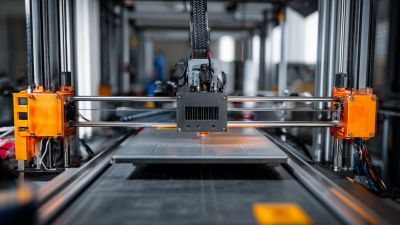
Choosing the right 3D printer for your business involves understanding the various technologies available. Fused Deposition Modeling (FDM) is popular for its affordability and ease of use. This method works by extruding melted filament layer by layer. It's ideal for prototypes and simple parts but can struggle with complex geometries. Stereolithography (SLA) offers high precision and smooth finishes, making it suitable for detailed models in industries like jewelry and dental. However, it often requires post-processing.
When evaluating 3D printing technologies, consider the material compatibility. Different printers work with distinct materials, impacting the final product's strength and flexibility. For instance, Selective Laser Sintering (SLS) is effective for durable parts made from powder materials. While this technology excels in making functional prototypes, it can come with higher costs and longer production times.
Understanding your business needs is crucial. You might need high-speed production or detailed craftsmanship. Don’t overlook the learning curve associated with each technology. Some printers require extensive training, which can be a barrier for small teams. Each option carries its own challenges, and reflecting on your unique requirements can lead to better choices.
Evaluating Cost-Effectiveness and ROI of 3D Printers
When evaluating the cost-effectiveness and ROI of 3D printers for your business, initial costs are crucial. The purchase price of a printer can vary significantly. You need to consider the materials, maintenance, and operating costs as well. These factors can impact overall profitability. It’s important to compare different printers based on these expenses. Sometimes, a lower initial price can lead to higher long-term costs.
Analyzing ROI goes beyond just numbers. Think about the potential applications of the printer in your business. Will it speed up production? Can it enhance product designs? Gathering feedback from team members can provide valuable insights. Ask how a 3D printer might change your workflow.
Consider also the learning curve associated with new technology. Employees may need training, which adds to costs. There is no perfect solution. Adjusting expectations based on real-world feedback can guide your decision. Keep evaluating the printer's performance against your goals.
Cost-Effectiveness and ROI of Different 3D Printers
Assessing Material Compatibility for Industry-Specific 3D Printing
Choosing the right 3D printer involves understanding material compatibility. Different industries require specific materials, impacting the final product's quality. For instance, aerospace parts demand lightweight, high-strength materials. These choices affect durability and performance.
Evaluate the materials based on your business needs. Look into thermoplastics, metals, and composites. Each material has unique properties. Not every printer can handle these variations. A mismatch can lead to structural weaknesses. Testing different materials can reveal unexpected challenges.
Think about processing requirements. Some materials need precise temperature controls and environments. Regular printer calibration is essential. Failing to account for this may result in poor prints. Investigate whether your team has the expertise to manage these variables effectively. Real-world applications often highlight material limitations. Be prepared for a learning curve as you adapt to 3D printing's complexities.