
How to Choose Custom Aluminum Tri-Fold Blind Rivets?
Choosing Custom Aluminum Tri-Fold Blind Rivets starts with understanding the joint, not just the rivet’s price or finish. These fasteners are designed to form three legs on the blind side, helping distribute clamping force across softer or thinner materials. That can be useful when access is limited to one side, such as inside a cabinet frame or behind a sheet-metal panel. Fit matters. The right choice depends on the combined thickness of the parts, the hole diameter, and the specified grip range.
Aluminum offers low weight and useful corrosion resistance in many applications, but it is not the best match for every load or environment. Consider the materials being joined, expected vibration, exposure to moisture, and the consequences of joint failure. Check the manufacturer’s technical data for dimensions, strength values, installation requirements, and compatible setting tools. A rivet that looks close may still be outside the recommended grip range. Small differences matter.
Before placing a large order, test sample rivets in the actual materials and hole conditions. Inspect the formed legs, the seated head, and the joint after installation. If the rivet sets unevenly or the sheets move, review the hole preparation, tool setup, and specification rather than assuming the fastener is defective. A datasheet is useful, but it cannot reveal every condition on a real assembly line. That deserves a second look. This guide explains the practical criteria for comparing options and helps you ask suppliers specific, verifiable questions.
Understand the Structure and Function of Tri-Fold Blind Rivets
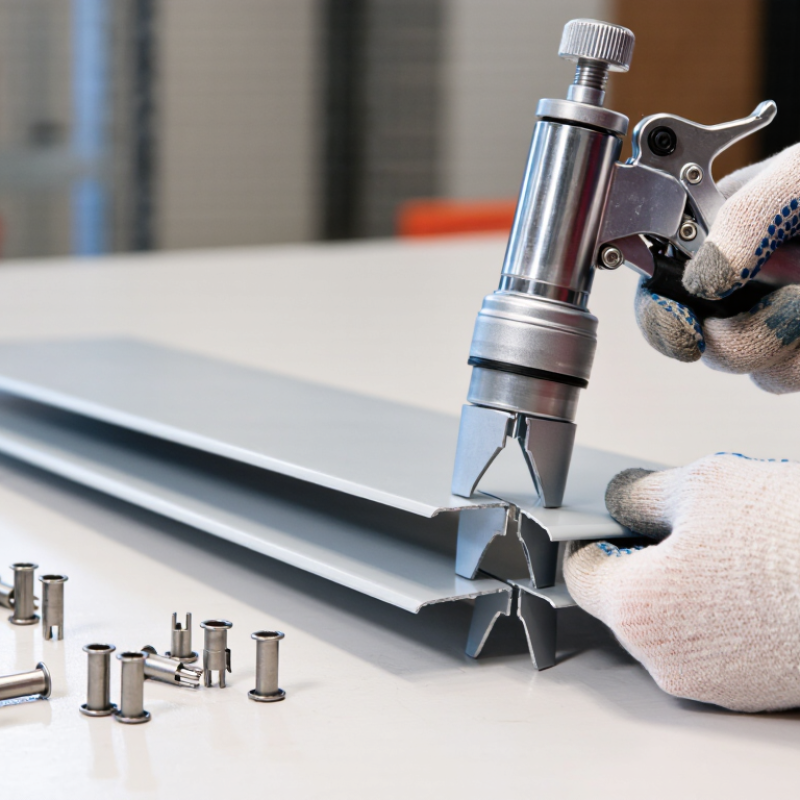
A tri-fold blind rivet has a tubular body, a head, and a pulling mandrel. During installation, a tool draws the mandrel through the body. The blind end then splits and folds into three broad legs. These legs press against the rear surface, spreading the clamping force over a wider area than a typical blind rivet. This structure can help secure thin, soft, or easily damaged materials when access is available from only one side. It is not a cure for every weak joint. Material thickness, hole condition, and load still matter.
When choosing a custom aluminum tri-fold rivet, match its grip range to the total thickness of the joined parts. Check the recommended hole diameter too; a loose or rough hole can prevent consistent setting. Select a head style that sits properly against the front surface, and confirm that the mandrel material suits the assembly’s environment. Mixed metals in a damp setting may need careful compatibility review. That detail is easy to miss. A practical check is to test samples in the actual material stack, then inspect whether all three legs form evenly and the joint remains firm. If the legs fold unevenly, revisit the hole size, tool setting, or grip range before specifying a larger rivet.
| Selection Dimension | Typical Specification or Feature | Function and Selection Guidance |
|---|---|---|
| Rivet body structure | A tubular rivet body with a pre-installed mandrel; the blind side opens into three folding legs during setting. | The three legs spread the load over a wider area on the inaccessible side of the joint than a conventional bulb-forming rivet. |
| Blind-side formation | Three distinct petals or legs fold back against the rear surface of the workpiece. | This broad bearing area can help reduce pull-through in thin, soft, or brittle materials. Confirm that there is enough space behind the hole for the legs to form. |
| Body material | Aluminum alloy body; specify the alloy and temper for the required strength, formability, and corrosion conditions. | Aluminum offers low weight and good corrosion resistance in many environments. The body material alone does not determine the material of the mandrel. |
| Mandrel material | Selected separately from the body material; common configurations use a steel or aluminum mandrel. | Match mandrel strength and corrosion behavior to the installation requirements. Confirm the complete rivet’s material combination when galvanic corrosion is a concern. |
| Nominal rivet diameter | Choose from the manufacturer’s available nominal diameters, commonly specified in millimeters or inches. | The rivet diameter must match the designed hole size and the required joint strength. Use the selected rivet’s datasheet for the recommended hole diameter and tolerance. |
| Grip range | The approved minimum-to-maximum total thickness of the materials being joined. | Measure the combined material thickness and select a grip range that includes it. A rivet outside its stated grip range may not form or clamp correctly. |
| Rivet body length | Specified by the rivet manufacturer for a particular diameter and grip range. | Do not select body length from appearance alone. Verify that the chosen rivet covers the material stack and forms the intended three-leg blind-side head. |
| Head style | Common options include dome or protruding head and large-flange head. | A large flange spreads load over a wider area on the accessible side. Check head clearance and the required finished appearance. |
| Hole preparation | Hole diameter, roundness, and alignment must follow the selected rivet’s installation specification. | Oversized, damaged, or misaligned holes can reduce joint performance or prevent proper setting. Test the hole and rivet combination on representative materials. |
| Setting tool | Use a compatible blind-rivet tool and nosepiece for the rivet diameter and mandrel design. | Confirm tool capacity and access to the installation point. Make sample installations to check setting quality before production. |
| Application suitability | Often considered for thin sheet, plastics, composites, or other assemblies where access is available from one side. | Check the material’s compressive strength, thickness, temperature exposure, vibration, and service loads. Tri-fold geometry does not replace application-specific testing. |
| Custom-order details | Define body alloy, mandrel material, diameter, grip range, body length, head style, finish, and packaging requirements. | Provide the joint material stack, hole specification, installation method, and performance requirements when requesting a custom configuration. |
| Specification note | Dimensions and performance are product-specific. Treat this table as a selection guide, not a universal dimensional standard; confirm final values against the chosen rivet manufacturer’s technical data and application testing. | |