
10 Tips for Choosing a Commercial Chiller
A Commercial Chiller is more than a machine that removes heat. It is a long-term decision affecting operating costs, production stability, and maintenance work. The right choice depends on the building’s actual cooling load, not simply its largest possible demand. A unit that is oversized may cycle inefficiently; one that is undersized can struggle during hot afternoons or busy production shifts.
Energy-efficiency expert Amory Lovins offers a useful principle: “The cheapest energy is the energy you don’t use.” Applied to chiller selection, that means comparing real-world efficiency, not just a headline rating. Look closely at seasonal performance, part-load operation, controls, and the conditions behind the manufacturer’s figures. Then consider the practical details: available floor space, water or air-cooled design, leaving-water temperature, service access, and local technical support. Small details matter. A service panel blocked by a pipe can turn a routine inspection into a frustrating job.
These ten tips will help buyers compare capacity, efficiency, system compatibility, installation needs, and lifecycle costs with greater care. They also highlight questions worth asking suppliers, such as how performance changes when demand falls at night. Specifications do not tell the whole story. Site conditions, future load changes, and maintenance habits can alter the result. Even careful planning has limits; no checklist can replace a proper load assessment or a qualified engineer’s review. Use the guidance as a starting point, and verify each assumption before choosing a model.
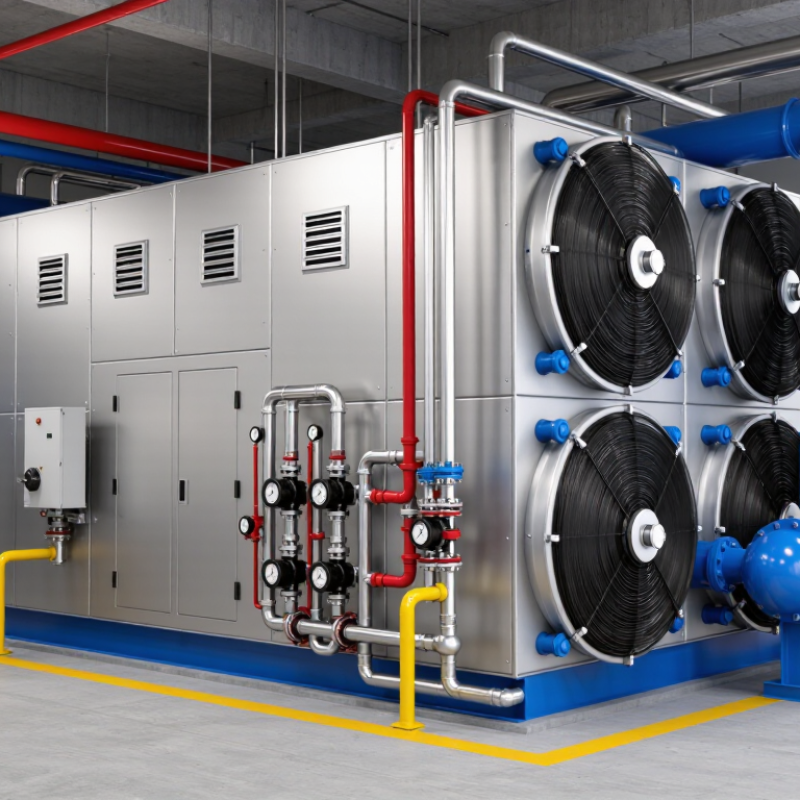
Assess Your Cooling Load and Operating Requirements
Before comparing chiller capacities, build a load profile for the actual building and its operating schedule. Review utility bills, equipment logs, and existing control trends across hot and mild days. Separate comfort cooling from process loads, since a production line may run overnight. Include occupancy, ventilation, lighting, equipment heat, and humidity needs. Check the hottest design conditions, not just average afternoons. Peak matters. But avoid sizing around a brief, unusual spike without checking its cause. The U.S. Energy Information Administration’s 2018 Commercial Buildings Energy Consumption Survey estimates that space cooling accounts for about 9% of commercial-building site energy use. That figure describes buildings broadly, not your chiller plant; use it as context, not a sizing rule.
Translate the load profile into required cooling capacity, chilled-water temperatures, and daily run hours. Confirm whether loads operate together or can be sequenced. A warehouse with afternoon loading doors behaves differently from a clinic with steady ventilation loads. Map seasonal changes and planned expansions, too. ASHRAE’s Handbook—HVAC Applications provides guidance for assessing cooling loads and system operation; verify calculations against site measurements where possible. Ask operators about recurring temperature complaints and unexplained overnight demand. Their notes can reveal what the model missed. This estimate is rarely perfect. Record assumptions, especially future growth, because small guesses can produce oversized equipment and unnecessary cycling.
Choose the Chiller Type and Refrigerant for Your Application
Choose the chiller type around the heat source and the site conditions. An air-cooled chiller rejects heat through outdoor coils, so check airflow, dust, and the hottest summer days. A water-cooled model uses a cooling tower and can suit steady, larger loads, but it needs water treatment and maintenance. That difference matters. Measure the real load. A plant with sharp production peaks may need a different setup from a building with stable cooling demand. Use actual operating data where possible; estimates can miss brief but important temperature swings.
Select refrigerant only after defining the required leaving-fluid temperature and expected ambient range. Confirm that the chiller is designed for that refrigerant, and consider its safety classification, service availability, and operating efficiency at your real conditions. Do not choose by efficiency claims alone. A rating at one test condition may not match a hot rooftop or a low-temperature process. It is easy to overfocus on the nameplate and undercheck who can maintain the system locally. Review the equipment documentation with a qualified refrigeration professional, especially when comparing refrigerants with different pressure or temperature characteristics. If the application changes later, the original choice may become a limitation.
| # | Selection factor | Practical guidance | Options and application notes |
|---|---|---|---|
| 1 | Calculate the cooling load | Size the chiller from a documented heat-load calculation, including process loads, occupancy, ventilation, equipment, and expected peak conditions. Avoid sizing from floor area alone. | Confirm both peak and typical loads. A load profile helps determine whether one chiller, multiple units, or staged capacity is appropriate. |
| 2 | Choose air-cooled or water-cooled | Air-cooled chillers reject heat directly to outdoor air and generally avoid cooling-tower water use. Water-cooled chillers reject heat through a condenser-water system and cooling tower. | Air-cooled systems can simplify installation where water is limited. Water-cooled systems can be suitable for larger facilities with space, water treatment, and maintenance resources for a tower system. |
| 3 | Match the chiller type to the site | Consider climate, available plant-room or roof space, noise limits, water availability, and maintenance access before selecting a configuration. | Air-cooled, water-cooled, and evaporative-cooled designs have different site and utility requirements. Evaporative systems require water management and suitable operating conditions. |
| 4 | Select a compressor approach | Compare part-load performance, operating hours, capacity range, turndown, and maintenance needs—not just the rated full-load efficiency. | Scroll compressors are commonly used in smaller modular systems; screw compressors serve many medium-to-large applications; centrifugal compressors are often considered for larger, steady cooling loads. Actual suitability depends on the model and design conditions. |
| 5 | Set the required leaving-water temperature | Confirm the process or building design temperature and the required temperature difference across the system. Lower chilled-water temperatures can increase chiller energy use. | A 6°C leaving chilled-water temperature is a common HVAC design example, not a universal requirement. Process cooling may require different temperatures; verify equipment and load specifications. |
| 6 | Review refrigerant suitability | Check local regulations, refrigerant availability, service capability, safety classification, and the equipment manufacturer’s approved refrigerant. Refrigerants are not interchangeable. | Potential choices vary by equipment and jurisdiction. Examples include R-134a, R-513A, R-1234ze(E), ammonia (R-717), and carbon dioxide (R-744); each has distinct performance, safety, and application considerations. |
| 7 | Compare climate impact and safety | Consider refrigerant global-warming potential (GWP), leakage risk, flammability, toxicity, and pressure-related requirements as part of the full system assessment. | For reference, commonly cited 100-year GWP values include approximately 1,430 for R-134a, 631 for R-513A, less than 1 for R-1234ze(E), 0 for ammonia, and 1 for carbon dioxide. Values and regulatory methods can vary; consult current local requirements and safety standards. |
| 8 | Check efficiency at real operating conditions | Request performance data at the specified chilled-water and entering condenser conditions. Evaluate seasonal or integrated efficiency where available. | For air-cooled units, outdoor temperature affects heat rejection. For water-cooled units, cooling-tower and condenser-water conditions affect total plant energy, so compare the complete system where possible. |
| 9 | Plan for part-load operation and redundancy | Match capacity control to the facility’s load pattern and decide what cooling must remain available during maintenance or a unit fault. | Multiple chillers can provide staged capacity and operational redundancy, but the arrangement should be checked against the required reliability level, controls, and lifecycle cost. |
| 10 | Assess lifecycle cost and service needs | Compare purchase, installation, energy, water, maintenance, refrigerant management, and end-of-life costs over the expected service life. | Confirm local technician availability, spare-parts access, water-treatment needs for tower systems, controls integration, and a realistic maintenance plan before final selection. |
Compare Capacity, Energy Efficiency, and Performance Ratings
Choosing a commercial chiller starts with matching its capacity to the building’s actual cooling load. Estimate demand during the hottest operating periods, not just on an average day. A busy kitchen, for example, may add heat whenever ovens and dishwashers run. Include those changing loads in your calculations. Oversizing can cause frequent cycling and waste energy, while undersizing may leave temperatures unstable. A little spare capacity can help, but it should have a reason.
Tips: Compare the same capacity units and operating conditions. Check energy-efficiency ratings, such as kW per ton or EER, and confirm how each figure was measured. Lower energy use is better at comparable conditions. Ask for part-load data, too. Chillers often run below full capacity. Small details matter.
Performance ratings are useful only when they reflect your planned water temperatures, flow rates, and outdoor conditions. Compare the rating tables, not just headline numbers. Review service access and sound levels alongside efficiency; a unit that is difficult to maintain can become an avoidable burden. If supplier estimates differ, check their assumptions before choosing. I might still miss a seasonal change, so tracking actual loads after installation can reveal where the estimate was off.
Check Site Conditions, Installation Needs, and System Compatibility
A commercial chiller should fit the building, not just the cooling load on a spreadsheet. Walk the proposed location and check ambient temperature, ventilation, drainage, and access for maintenance. Measure doorways and service clearances; a unit that cannot be moved into place creates expensive delays. Tip: Note nearby heat sources, such as kitchen exhausts or sunlit walls. Small details matter.
Installation needs can change the real project cost. Check whether the floor can support the equipment, where pipework can run, and how technicians will reach filters and controls. Confirm power supply and water connections with qualified site professionals before ordering. Leave room for lifting equipment if the chiller may need replacement later. I have seen access overlooked during planning; it is an easy mistake to repeat.
System compatibility matters just as much as capacity. Compare the chiller’s required flow rate, water temperatures, pressure, and control signals with the existing pumps, piping, and building controls. Ask for operating data at the site’s actual conditions, not only headline ratings. Tip: Verify connection sizes and control protocols in writing. If drawings are incomplete, pause and check them. Guesswork here can lead to poor performance, even when the chiller itself is correctly sized.
Evaluate Maintenance, Warranty, and Supplier Support
A commercial chiller is a long-term operating commitment, not just a purchase. Before signing, ask who handles routine inspections, emergency calls, and replacement parts. The U.S. Department of Energy’s Federal Energy Management Program notes that effective operations and maintenance can reduce energy costs by 5–20% compared with reactive maintenance. That range is a useful benchmark, not a guarantee; actual savings depend on the system and its operating conditions.
Tip 1: Check the warranty line by line. Confirm coverage periods for the compressor, controls, and labor, plus response times and exclusions. Ask for sample maintenance records and a written service schedule. Tip 2: Test supplier support before you need it. Request a named service contact, after-hours procedures, and typical parts lead times. A spare sensor may be easy to source; a specialized compressor may not be. Get the answer in writing.
Tip 3: Look beyond the warranty length. Compare technician training, local coverage, and maintenance pricing over several years. The DOE guidance also emphasizes planned maintenance, but plans can look better on paper than in a noisy mechanical room at 2 a.m. Ask how service visits are documented and how recurring alarms are handled. No checklist catches everything. Leave room to reassess after the first season.
10 Tips for Choosing a Commercial Chiller: Maintenance, Warranty & Supplier Support
Suggested evaluation weighting for comparing chiller proposals—not a published industry survey. Prioritize maintenance access, clear warranty coverage, and responsive supplier support, while also assessing energy performance and parts availability.