What Is a 16A Switch and How Does It Work?
A 16a Switch is designed to control circuits carrying up to 16 amperes under specified conditions. That rating matters. It is not a promise that every appliance or installation can safely use the full load. Voltage, wiring, connected equipment, and switching frequency all affect performance.
The distinction is important in everyday settings. A switch beside a heater may look much like one controlling a lamp, yet the electrical demands can differ sharply. NFPA’s Home Structure Fires report estimates that electrical distribution and lighting equipment were involved in an average of about 34,000 reported U.S. home structure fires each year from 2015 to 2019. This figure covers a broad equipment category; it does not mean switches alone caused those fires. IEC 60669-1 sets requirements for switches used in fixed household and similar electrical installations, offering a technical reference for product design and testing. Still, a standard or rating label cannot confirm that a particular switch suits a particular circuit. That requires checking the manufacturer’s instructions and the actual load. This guide explains what “16A” means, how contacts open and close a circuit, and why load type matters. It also points out a practical limitation: current ratings can be easy to misread when voltage, motor starting current, or installation conditions are ignored. When specifications are unclear, have a qualified electrician verify the choice before installation.
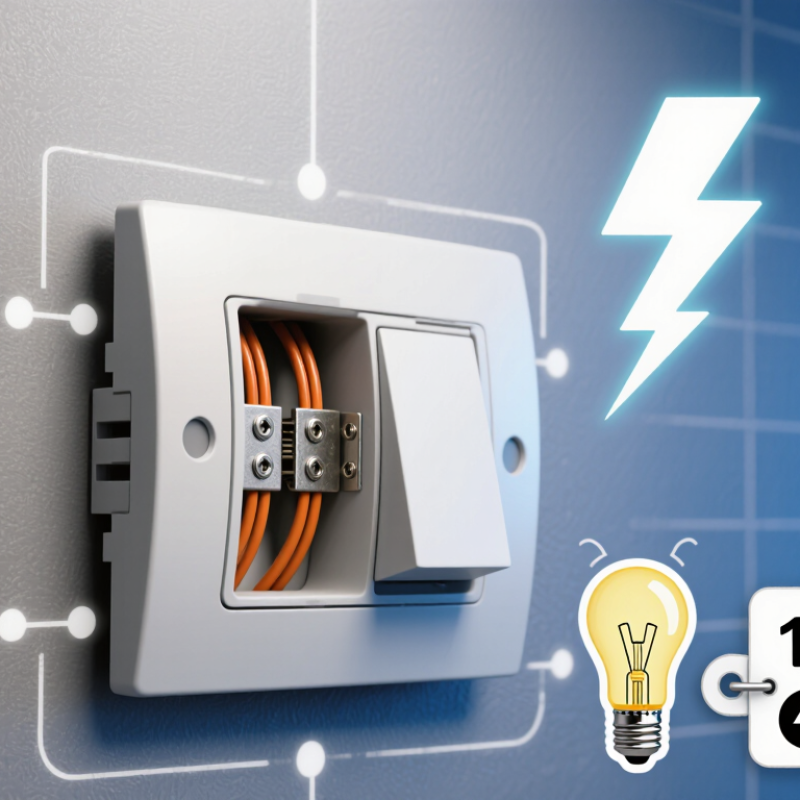
What a 16 A Switch Is: Rated Current and Common 250 V AC Rating
A 16 A switch is designed to carry up to 16 amperes under specified conditions. Many household models also show a 250 V AC rating. These numbers describe separate limits: current and voltage. They are not interchangeable. A switch marked 16 A, 250 V AC is not automatically suitable for every appliance drawing less than 16 amps.
The rating matters at the contacts inside the switch. When switched on, the contacts complete a circuit; when switched off, they separate it. A sharp click. The contacts still need to handle heat and the small electrical arc that can occur during switching. Motor-driven appliances may create different loads from simple lamps, so the printed rating and manufacturer’s instructions should be checked together. Ratings can also depend on the load type and operating conditions.
Look closely at the switch body or its documentation for the full marking, including AC or DC notation. Do not assume a 250 V AC rating means the switch can safely interrupt any 250-volt circuit in every installation. It is easy to read the label too quickly. Wiring condition, enclosure, and correct installation also affect safe operation. If the load or rating is unclear, have a qualified electrician verify the match before use.
Key Components: Contacts, Operating Mechanism, Terminals, and Insulation
What Is a 16A Switch and How Does It Work?
A 16A switch is designed to carry a rated current of up to 16 amperes under specified conditions. The rating alone does not tell you whether it suits every appliance. Load type, voltage, wiring, and the switch’s installation all matter. Inside, several components work together to open and close the circuit.
Contacts form the conductive path. When the switch is on, they touch and allow current to flow; when it is off, they separate. Their material and contact pressure help limit heat and electrical wear.
The operating mechanism moves these contacts, often through a rocker, lever, or spring-assisted action. You may feel a distinct click, but a click by itself does not prove the contacts are in good condition. Small parts matter.
Terminals connect the switch to the circuit conductors. Secure, correctly sized connections reduce the risk of loose wiring and excess heat.
Insulation separates live parts from the switch’s accessible surfaces and helps prevent unintended contact. Its condition can deteriorate through heat, age, or physical damage.
A switch that looks intact may still have an internal fault, so visual inspection has limits. I would also question any selection based only on “16A”: motor loads and other demanding appliances may need a switch rated for that specific use. Installation and testing should follow the product instructions and be handled by a qualified person when necessary.
How It Works: Circuit Switching, Contact Separation, and Arc Control
A 16A switch is rated to carry up to 16 amperes under its specified conditions; it does not guarantee every connected load is suitable. At 230 volts, 16 amperes corresponds to 3.68 kilowatts for a purely resistive load, but motors and other inductive appliances behave differently. IEC 60669-1 covers switches for household and similar fixed electrical installations. When the switch is turned off, its contacts separate and interrupt the circuit. A visible click is the small mechanical action behind that break.
The gap matters. As contacts part, current can briefly continue through an electrical arc, especially with inductive loads. The arc heats and wears contact surfaces. Switch designs manage it through contact spacing, rapid separation, and arc-resistant internal components; the exact method varies by switch construction. Not magic. A slow or damaged mechanism can make switching less reliable, so a warm faceplate or crackling sound deserves attention from a qualified electrician. NFPA’s Home Fires Involving Electrical Distribution or Lighting Equipment report recorded an average of 34,000 U.S. home fires annually from 2012 to 2016. That figure covers electrical and lighting equipment broadly, not switches alone. It is a useful reminder, though: a 16A label is a rating, not a diagnosis of installation safety.
Reading the Rating Plate: 16 A, Voltage, and Load Type
A 16 A marking is a current rating, not a promise that every connected load is suitable. Read it beside the voltage and load symbols. For example, 16 A at 250 V AC gives a theoretical 4,000 VA figure (16 × 250). That calculation assumes the stated conditions; it is not a universal safe-load allowance. IEC 60669-1 covers many switches used in household fixed electrical installations and relies on defined ratings and test conditions.
The load type matters. A heater is largely resistive, while a motor or transformer can draw a brief starting surge. That surge may stress contacts even when the running current appears below 16 A. A plate marked 250 V~ indicates an AC rating; do not treat it as a DC rating. The exact symbols and permitted loads depend on the switch design. I would check the manufacturer’s technical sheet, not guess from the number alone.
Tips: Match current, voltage, and load type. Check the wiring and terminal condition, too. If the plate is unclear, ask a qualified electrician before connecting the load. Little markings matter.
What Is a 16 A Switch and How Does It Work?
Reading the rating plate: A 16 A marking indicates the switch’s rated current; the permitted voltage and load type must also match the appliance. The chart shows theoretical power for a 16 A resistive load, calculated as voltage × current.
Important: These figures are arithmetic examples, not approval to use a particular switch at every voltage shown. Check the switch’s complete rating plate and installation instructions. Motors and other inductive loads can require a lower switching rating than resistive loads.
IEC 60669-1: Safety and Testing Requirements for Household Switches
What Is a 16A Switch and How Does It Work?
A 16A switch is rated to carry up to 16 amperes under specified conditions. It opens or closes a circuit when its contacts separate or meet. The rating alone does not confirm suitability for every appliance. Voltage, load type, wiring, and installation conditions also matter.
IEC 60669-1 sets safety and testing requirements for household and similar fixed-installation switches. Testing may assess insulation, temperature rise, mechanical operation, and the security of terminals. These checks help reveal risks such as overheating or loose connections. A compliant switch still needs correct installation and use within its marked ratings. Details can vary with the standard’s edition and local adoption, so product documentation matters. A sturdy-looking casing is not proof of safe performance; that is easy to forget.
Tips: Check the switch’s rated voltage and current against the circuit and intended load. Look for clear markings and installation instructions. Have a qualified electrician verify compatibility, especially when replacing a switch for a motor or other demanding load. Don’t guess from appearance.