What Are 3D Printing Materials and How Do They Work?

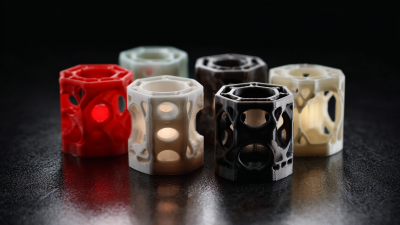
3D Printing Materials are the physical substances that become functional objects through additive manufacturing. They include thermoplastics, photopolymers, metal powders, ceramic slurries, and composite filaments. Each material behaves differently under heat, light, pressure, or chemical binding. That difference determines strength, flexibility, surface finish, accuracy, and long-term durability.

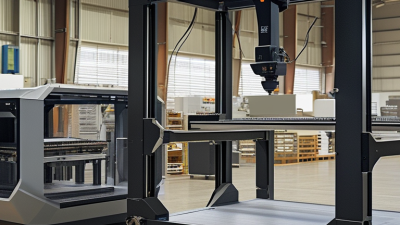
The basic process is surprisingly direct. A digital model is divided into thin layers by slicing software. The printer then deposits, cures, fuses, or binds material one layer at a time. In fused filament fabrication, a heated nozzle softens polymer filament and places it along programmed paths. In stereolithography, ultraviolet light hardens liquid resin inside a vat. Selective laser melting uses concentrated energy to fuse metal powder. The result may look simple, but temperature, moisture, particle size, and cooling speed can change performance significantly.

The market is expanding beyond prototypes. Wohlers Report 2024 valued the global additive manufacturing industry at approximately $20.0 billion in 2023, following 13.5% growth. Its findings show increasing demand for production-grade materials and reliable process control. ASTM International and ISO 52900 also provide terminology that helps manufacturers compare technologies more consistently. Still, material selection is not perfectly standardized across suppliers. A “high-strength” filament can perform differently between machines. That is easy to overlook. Therefore, evaluating 3d Printing Materials requires more than reading a product label. Engineers should examine datasheets, test conditions, moisture handling, layer adhesion, and intended use. This guide explores how these materials work, where their limitations appear, and why practical testing remains essential.
What Are 3D Printing Materials and How Do They Work?

Define 3D Printing Materials Through ISO/ASTM’s Seven Process Categories

What Are 3D Printing Materials and How Do They Work?

ISO/ASTM 52900:2021 defines additive manufacturing through seven process categories. Each category changes how material becomes a part. In vat photopolymerization, liquid resin hardens under controlled light. Material extrusion pushes heated thermoplastic through a small nozzle. Powder bed fusion selectively melts or sinters polymer, metal, or ceramic powder. Material jetting deposits tiny droplets, then cures or solidifies them. The material is not passive. Its viscosity, melting range, particle size, and shrinkage directly affect accuracy.

Binder jetting places a liquid binder onto a powder bed, followed by curing and often sintering. Sheet lamination bonds thin sheets before cutting their outlines. Directed energy deposition feeds metal wire or powder into a focused heat source. ISO/ASTM’s framework helps engineers compare these distinct material behaviors. It also prevents a common mistake: treating “3D printing material” as one universal category.

Industry scale is expanding. The Wohlers Report 2024 valued the global additive manufacturing industry at about 20.0 billion US dollars in 2023, with 13.5% annual growth. That growth includes machines, materials, software, and services. Still, market value does not guarantee reliable parts. A resin may print finely but remain sensitive to heat. A metal powder may produce strength, yet require difficult post-processing. Real-world selection is less tidy than the categories suggest. Testing, operator experience, and application-specific data remain essential.

Compare Filaments, Photopolymers, Powders, and Pastes by Physical State

What Are 3D Printing Materials and How Do They Work?

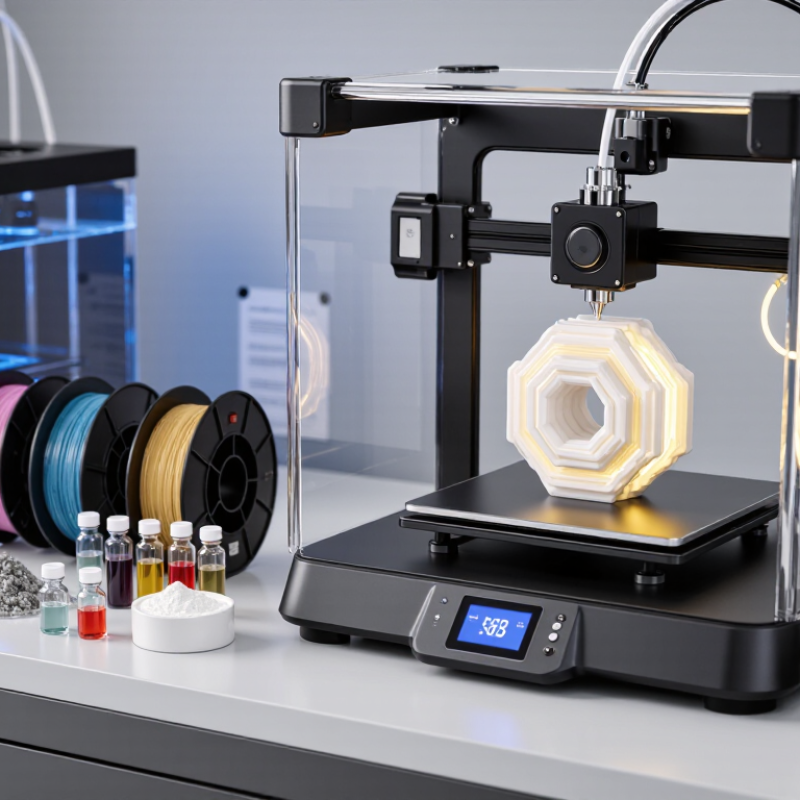
The material’s physical state often determines the printing method. Filaments are solid polymer strands, commonly 1.75 or 2.85 millimeters wide. A heated nozzle softens them, then deposits thin lines that cool into layers. Photopolymers begin as liquid resin. Ultraviolet light cures selected areas, creating detailed parts with smooth surfaces. Powders remain granular. Heat, a binding agent, or both join each particle layer by layer. Pastes behave differently again. Their thick mixtures move through a nozzle, then dry, chemically harden, or receive later heat treatment.

The Wohlers Report 2024 valued the global additive manufacturing industry at 20.035 billion US dollars in 2023, with materials included in this expanding ecosystem. That growth reflects wider material choices, not just faster machines. Filaments are practical for prototypes and larger components. Photopolymers suit fine features, but cured parts may become brittle. Powders support complex geometries without traditional support structures, although moisture and particle size demand careful control. Pastes can contain ceramic, metal, or food-safe compounds, yet drying shrinkage remains difficult to predict. The boundary is not perfectly clean.

Tips: Check viscosity, moisture, curing depth, and thermal behavior before printing. For powders, measure storage humidity and particle consistency. For pastes, test a small pattern first. A 0.4-millimeter nozzle may clog when the mixture contains oversized particles. I still find material datasheets incomplete sometimes. Compare them with laboratory tests, safety documentation, and published methods before trusting a final result.

What Are 3D Printing Materials and How Do They Work? — Comparing Filaments, Photopolymers, Powders, and Pastes by Physical State

Material Category Physical State Common Material Families How It Works Typical Printing Processes Layer Formation Typical Accuracy and Surface Finish Key Advantages Main Limitations Typical Applications Post-Processing and Handling
Filaments Solid thermoplastic wire Solid polymer supplied as a continuous spool, commonly in diameters of approximately 1.75 mm or 2.85 mm. Thermoplastics such as PLA, ABS, PETG, nylon, TPU, polycarbonate, and fiber-reinforced polymer blends. A motor feeds the filament into a heated nozzle. The material melts or softens, is deposited along a programmed path, and solidifies as it cools. Material extrusion, commonly known as fused filament fabrication or fused deposition modeling. Each layer is deposited as beads or roads of molten polymer. Adjacent roads bond through heat and pressure, while bonding between layers depends on temperature, cooling, and material type. Typical layer heights range from about 0.05 to 0.40 mm. Surfaces usually show visible layer lines; dimensional accuracy is commonly suitable for functional prototypes and general-purpose parts. Relatively low material cost; broad material availability; simple material storage for many standard polymers; suitable for large parts; capable of producing functional and mechanically useful components. Visible layer lines; anisotropic strength; warping can occur with some polymers; overhangs require support or careful orientation; thermal shrinkage may affect dimensional accuracy. Functional prototypes, fixtures, brackets, educational models, enclosures, replacement parts, and low-volume production components. May require support removal, sanding, machining, vapor or chemical smoothing for selected materials, and annealing in some applications. Moisture-sensitive filaments, especially nylon and some engineering polymers, should be dried and stored in sealed conditions.
Photopolymers Liquid resin Light-sensitive liquid resin that changes into a solid polymer when exposed to a suitable wavelength of light. Acrylate- and methacrylate-based resins, including standard, tough, flexible, castable, dental, and high-temperature formulations. Selective exposure to ultraviolet or visible light initiates photopolymerization. Exposed regions cure into solid layers while unexposed resin remains liquid. Vat photopolymerization, including stereolithography, digital light processing, and liquid crystal display-based systems. Layers are cured by a laser, projected image, or masked light source. Chemical bonds form during curing, and the part is built within or above a resin vat. Layer heights commonly range from about 0.02 to 0.15 mm. Very fine details and smooth surfaces are generally achievable, particularly on small or intricate parts. High detail resolution; smooth surface quality; excellent ability to reproduce small features, textures, and thin walls; specialized formulations are available for different performance needs. Uncured resin can irritate skin and requires careful handling; many parts are more brittle than machined or injection-molded plastics; long-term ultraviolet exposure can affect properties; support marks may need finishing. Detailed prototypes, dental and medical models, jewelry patterns, miniature components, presentation models, casting patterns, and small intricate parts. Parts normally require washing to remove uncured resin and additional light curing to reach final properties. Supports are removed after printing. Gloves, eye protection, ventilation, and proper disposal of liquid resin and contaminated cleaning fluid are important.
Powders Fine solid particles Dry polymer, metal, ceramic, or composite particles stored and processed as a powder bed or directed powder feed. Polyamide and other polymer powders, metal powders such as stainless steel or titanium alloys, and selected ceramic or composite powders. A heat source, laser, electron beam, or binder selectively joins particles. Depending on the process, particles are melted, sintered, or bonded with a liquid binder. Powder bed fusion, including selective laser sintering and laser or electron beam melting; binder jetting; and directed energy deposition with powder feed. A thin layer of powder is spread across the build area. Selected regions are fused or bonded, and the process repeats until the part is complete. Unfused powder may support the geometry in some processes. Typical layer heights range from about 0.02 to 0.20 mm, depending on the process and powder. Surface texture is often more granular than resin printing and may require finishing. Can produce complex geometries, internal channels, and lattice structures; some processes need little or no dedicated support material; suitable for functional polymer and metal parts; efficient for certain nested production layouts. Equipment and process control can be costly; powder handling requires safety measures; parts may have rough surfaces, porosity, residual stress, or shrinkage; unused powder may require sieving, refreshing, or recycling according to process rules. Complex functional parts, lightweight lattices, aerospace and engineering components, production tooling, medical models, and customized polymer or metal components. Polymer parts may require depowdering, bead blasting, tumbling, dyeing, or machining. Metal parts can require heat treatment, support removal, machining, and surface finishing. Fine powders require controlled ventilation, housekeeping, and appropriate respiratory and explosion-prevention measures where applicable.
Pastes and Slurries Viscous fluid or suspension Viscous material containing ceramic, cementitious, metal, food, or biological solids suspended in a liquid or binder system. Ceramic slurries, cement and concrete mixtures, silicone pastes, clay, metal pastes, hydrogel-based materials, and food-grade viscous mixtures. A nozzle, syringe, screw, or pressure system extrudes the material. The deposited shape retains its form through viscosity, gelation, drying, chemical reaction, cooling, or later thermal treatment. Direct ink writing, paste extrusion, syringe-based extrusion, concrete printing, and material extrusion of reactive or filled compounds. Continuous beads are deposited layer by layer. The material must balance flow through the nozzle with enough shape retention to support subsequent layers. Typical layer heights range from about 0.30 mm to several millimeters, depending on nozzle size, viscosity, and application. Surface finish is often bead-like and may change during drying or curing. Can process materials that cannot be melted into filament; suitable for large-scale structures and high-solid-content formulations; enables ceramic, cement-based, silicone, biological, and food-related printing. Dimensional change during drying, curing, or firing can be significant; flow stability is sensitive to formulation and environmental conditions; unsupported overhangs are difficult; nozzle clogging and batch-to-batch variation may occur. Ceramic components, architectural and concrete structures, silicone seals, molds, artistic objects, laboratory scaffolds, food forms, and specialized composite parts. May require drying, chemical curing, thermal debinding, sintering, firing, refrigeration, or controlled humidity. Formulations should be mixed consistently, protected from contamination, and used within their workable time.

Trace Material Deposition from 1.75 mm Filament to Printed Layers

What Are 3D Printing Materials and How Do They Work?

A 1.75 mm filament looks simple, but printing begins with controlled material movement. The drive gears grip the filament and push it toward a heated nozzle. Heat softens the polymer, while pressure forces it through a small opening. The nozzle then deposits a narrow bead onto the build surface.

Material behavior changes during this short journey. Moisture can create bubbles, weak layers, or rough surfaces. Temperature controls viscosity, while speed affects cooling and bonding. A slower outer wall often improves detail. The printed line is not perfectly round; it becomes a flattened track under nozzle pressure. Layer by layer, these tracks form the final object.

The 2024 Wohlers Report valued the global additive manufacturing industry at 20.035 billion dollars in 2023, showing how material control supports a growing production field. Industry testing also shows that tensile strength differs significantly between layer directions, especially in polymer parts. This matters in real workshops. A part may feel strong across its walls but fail between layers. That weakness is easy to underestimate. In practice, I would test moisture, extrusion width, and bonding before trusting a load-bearing design. Even a clean 1.75 mm filament can produce inconsistent layers when temperature or tension changes.

Explain Melting and Curing: Nylon at 220–260°C Versus 405 nm Resin

3D printing materials behave differently because heat and light control their shape. Nylon is a thermoplastic filament. A heated nozzle softens it at roughly 220–260°C, depending on grade, moisture, and printer settings. The melted polymer flows through a small opening, then cools into solid layers. It can be strong and slightly flexible. However, nylon absorbs moisture easily. Wet filament may hiss, bubble, or produce rough surfaces. Temperature alone does not guarantee quality.

Resin printing uses a liquid photopolymer rather than melted plastic. A 405 nm light source activates chemicals in each selected layer. The resin cures, or cross-links, into a solid shape. Unlike nylon, it does not need to reach a melting point during printing. Exposure time, layer thickness, resin temperature, and light intensity all affect results. Too little exposure leaves soft details. Too much can close small holes. I still find this balance less forgiving than filament printing.

Tips: Dry nylon before use, and store it in a sealed container with desiccant. Start with a tested temperature range, then adjust gradually. For 405 nm resin, wear suitable gloves and eye protection, and ensure strong ventilation. Wash and fully post-cure parts as directed. A simple exposure test can reveal more than guesswork, although test pieces consume time and material. That inconvenience is part of reliable process control.

Evaluate Material Performance Using Tg, Particle Size, and ±0.1 mm Accuracy

3D printing materials behave differently under heat, pressure, and repeated cooling. In polymer printing, Tg marks the transition from rigid to softer behavior. Above Tg, the material may deform more easily. Below it, the part usually holds its shape better. Tg is not a strength score. A high value can still hide poor layer bonding. In a workshop trial, I compare DSC data with a heated edge test. The numbers matter, but the printed part tells the truth.

Particle size becomes critical for powder-based processes. Fine particles can create smoother surfaces and tighter packing. They may also absorb moisture or agglomerate during storage. Coarse particles often flow more freely, yet they can leave rough edges and visible pores. I check size distribution with sieve analysis or laser diffraction, then inspect a 10 mm wall under magnification. One test is never enough. Humidity changes the result.

The ±0.1 mm figure describes dimensional tolerance, not guaranteed accuracy everywhere. Cooling shrinkage, nozzle movement, support removal, and part orientation all affect it. I print a calibration block with holes, steps, and a thin wall. Then I measure it using calibrated calipers and, when needed, a coordinate measuring machine. A hole may measure 9.86 mm instead of 10.00 mm. That failure is useful. It shows where the process needs adjustment. Material data should be checked against actual geometry, temperature, and batch conditions.