Top 10 3D Printed Parts Manufacturers in China
China’s 3D printing sector now serves industries ranging from aerospace and medical devices to consumer products. Yet a manufacturer’s capabilities matter more than its location or marketing claims. The right partner can turn a digital model into a dependable part, with controlled dimensions, suitable materials, and a finish ready for use.
Terry Wohlers, a respected additive-manufacturing analyst, has consistently emphasized a practical test: does the process create measurable value for the application? That question guides this look at ten 3d Printed Parts manufacturers in China. The comparison considers more than printer counts. It examines process options, material choices, quality controls, engineering support, production capacity, and communication during sampling and delivery. Ask for evidence. Request inspection records, material details, and clear explanations of tolerances before committing to a production run.
Details matter. A thin bracket may need support removal and careful dimensional checks. A visible prototype may need sanding or coating. A production component may demand repeatable results across batches, not just one impressive sample. These differences can change both cost and lead time.
No list is perfect. Rankings can shift as factories add equipment, improve processes, or focus on new markets. And a polished website proves little by itself. Use this guide as a starting point, then match each supplier’s verified capabilities to your part, volume, and quality requirements. One careful sample order can reveal gaps that a brochure cannot.
China’s 3D-Printed Parts Manufacturing Industry at a Glance
China’s 3D-Printed Parts Manufacturing Industry at a Glance
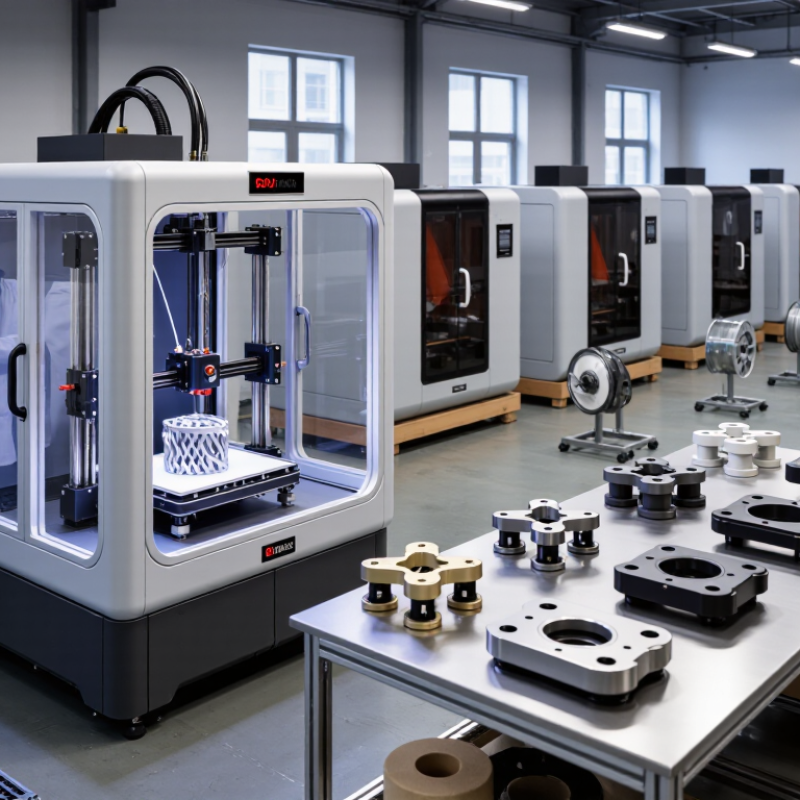
China’s 3D-printed parts sector serves product teams needing prototypes, custom fixtures, and small production runs. Suppliers commonly use polymer processes such as SLA, SLS, and FDM, alongside metal powder-bed methods. These technologies differ in surface finish, strength, cost, and practical part size. Printed components may still need machining, heat treatment, or careful support removal. No magic here.
Tips: Share a dimensioned drawing, material requirements, expected quantity, and working conditions. Ask how critical dimensions are measured, and request a sample when fit matters. Confirm whether the quote includes finishing and inspection. A low unit price can hide extra steps.
The industry benefits from manufacturing networks, skilled operators, and access to finishing services. Buyers should compare process capability rather than rely on broad claims about precision. For a snap-fit housing, check wall thickness and test repeated assembly. For a metal bracket, review build orientation and post-processing plans. Not every part. Even a clear drawing can miss a real-world constraint, and it is worth admitting that early. Supplier selection works best as a technical conversation, not just a price comparison.
Key Criteria for Assessing Chinese 3D-Printed Parts Manufacturers
When evaluating Chinese 3D-printed parts manufacturers, look beyond machine counts. The Wohlers Report 2024 valued the global additive manufacturing industry at $20.035 billion in 2023, up 11.1% year over year. Growth brings more suppliers, but capacity alone does not prove repeatable quality. Ask which processes they use, how operators control build parameters, and whether they can document material batches and post-processing steps.
Evidence matters. ISO/ASTM 52920:2023 sets requirements for industrial additive manufacturing sites and processes, providing a useful reference for supplier audits. Request inspection records, calibration schedules, and traceability from powder or resin lot to finished part. For a real check, compare a trial part’s measured dimensions with the drawing, then inspect a small feature such as a thin wall or threaded hole. A smooth sample can hide inconsistent internal quality. Ask how defects are detected and what happens when a part fails acceptance criteria.
Review the communication, too. Can engineers explain design-for-additive changes without quietly altering critical dimensions? Confirm tolerances, surface-finish expectations, inspection methods, packaging, and lead times in writing. A factory visit or video audit can reveal whether storage areas are clean and work orders match the quoted process. Still, audits have limits. A strong presentation is not production history; request records from comparable, completed jobs, with sensitive customer details removed.
Profiles of 10 Leading 3D-Printed Parts Manufacturers in China
China’s 3D-printed parts sector spans prototype studios, industrial job shops, and manufacturers serving specialized production needs. These ten profiles highlight different capabilities rather than ranking companies by unsupported claims. Buyers should verify materials, tolerances, inspection methods, and delivery schedules directly.
One manufacturer focuses on quick polymer prototypes, useful for checking fit before tooling. Another handles larger fused-filament parts for fixtures and housings. A third specializes in smooth resin components, where fine surface detail matters. A fourth produces nylon parts through powder-bed processes, suited to complex shapes. A fifth offers metal printing for demanding geometries, with process control worth examining closely.
A sixth combines printing with CNC finishing, helping parts meet specified interfaces. A seventh emphasizes short production runs and repeat orders. An eighth supports product teams with design-for-manufacturing feedback. A ninth focuses on tooling aids, such as custom jigs placed beside assembly lines. A tenth serves varied industrial projects, from replacement components to functional prototypes. Fit matters. These distinctions can blur in practice, and a polished sample does not guarantee consistent batch quality. Ask for inspection records, sample parts, and clear material specifications before choosing a supplier.
Representative Tensile Strength of 3D-Printed Materials
A materials-focused comparison relevant to industrial 3D-printed parts. The ranges are representative published values, not company-specific specifications or a manufacturer ranking.
Tensile strength is shown in MPa. Actual results depend on material grade, print orientation, process settings, and post-processing.
Materials, Printing Processes, and Industries Served
Chinese 3D-printed parts manufacturers typically work with polymer powders, engineering plastics, and metal alloys. Common choices include PA12 for lightweight housings, TPU for flexible seals, and stainless steel or titanium powder for load-bearing components. Fused filament fabrication suits larger, lower-cost parts; powder-bed fusion can produce complex geometries with fewer supports. Photopolymer printing captures fine surface details, though some resins need careful handling and post-curing. Small details matter.
Wohlers Report 2024 valued the global additive manufacturing industry at about $20.0 billion in 2023, an 11.1% year-on-year increase. That growth spans applications in automotive prototyping, aerospace components, medical devices, and industrial tooling. For buyers, the process name alone tells little: ask about material traceability, dimensional inspection, surface finishing, and repeatability across production batches. A metal bracket may need stress relief and machining after printing, while a polymer enclosure may need support removal and fit checks. Capabilities vary by factory, and online specifications do not always reveal the limits. That is worth checking early.
How to Select a Manufacturer for Your Project
Choosing among China’s 3D printed parts manufacturers means checking process fit, not just unit price.
The Wohlers Report 2024 estimated that the global additive manufacturing industry reached
$20.0 billion in 2023, growing 11.1% year over year.
That growth brings more options, but not every factory suits every part. Ask which process, material, and finishing steps match your drawing and expected service conditions. A thin-walled nylon housing and a load-bearing metal bracket need different tests.
Request a sample made with the proposed material and production settings. Inspect holes, mating faces, and edges; then compare measured dimensions with your drawing tolerances. Ask for material certificates, inspection records, lead times, and a clear plan for repeat orders. Small details matter. If the supplier cannot explain how it checks a critical dimension, treat that as a project risk, not a paperwork gap. The ASTM International and America Makes 2023 Additive Manufacturing Standardization Roadmap identifies qualification and consistency as ongoing industry needs. A polished sample alone proves little. I would also ask how the manufacturer handles failed builds, though this can feel awkward before a first order. Keep the answer in writing.