China Top 10 3D Printer Manufacturers for Global Buyers
China has become a major production base for additive manufacturing equipment, components, and materials. For global buyers, choosing a reliable 3 D Printer manufacturer requires more than comparing prices. Factory capability, certification, software support, delivery performance, and after-sales service all matter.
A printer may look impressive in a showroom. The real test appears later, during a twelve-hour production run, when a loose belt, unstable temperature, or delayed replacement part can stop work. This guide introduces ten leading Chinese 3 D Printer manufacturers for international buyers. It considers their technologies, product ranges, export experience, quality systems, and typical application fields.
Chuck Hull, the inventor of stereolithography, explained the core idea clearly: “The idea of 3D printing is to take a digital file and turn it into a physical object.” That simple process now supports prototyping, education, medical modeling, industrial tooling, and small-batch production.
Still, no ranking is perfect. A company strong in desktop machines may not suit an aerospace supplier. A low-cost model may also require more operator attention. Buyers should verify specifications, material compatibility, electrical standards, warranty terms, and local service arrangements before placing an order.
The manufacturers discussed here represent different strengths, not identical solutions. Some focus on accessible FDM systems. Others specialize in resin, SLS, metal printing, or large-format production. The right choice depends on the part, budget, production volume, and risk tolerance. Small details matter. Ask precise questions. Test sample parts whenever possible.
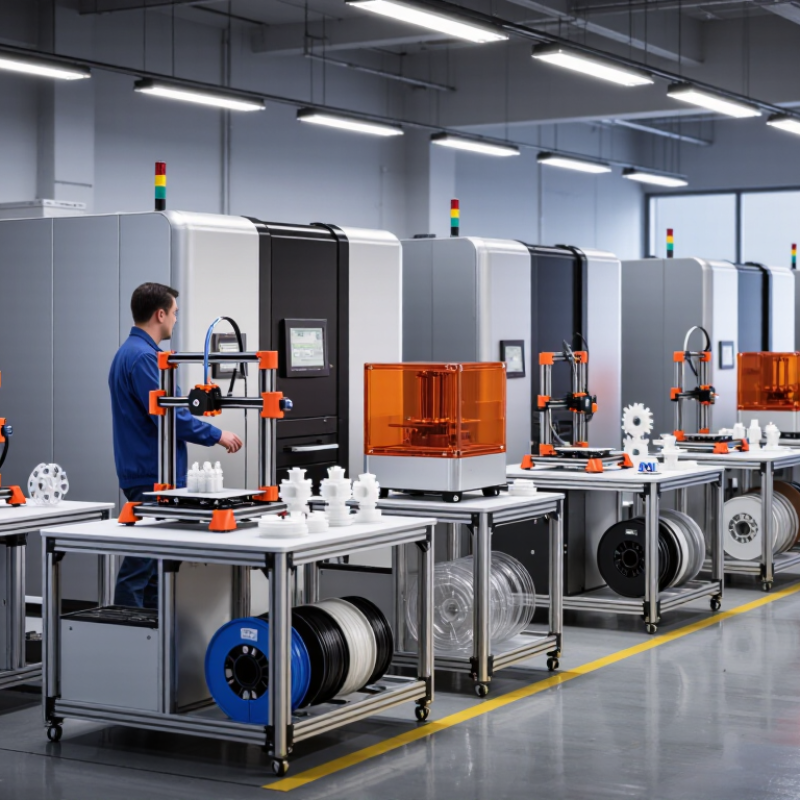
Defining the Criteria for Ranking China’s 3D Printer Manufacturers
China Top 10 3D Printer Manufacturers for Global Buyers
Defining the Criteria for Ranking China’s 3D Printer Manufacturers
A useful ranking should look beyond catalog size and headline specifications. For global buyers, print consistency matters more than a single impressive sample. Test parts should show clean edges, stable dimensions, and repeatable layer bonding across several runs. Small details matter. A loose belt or uneven first layer can turn a promising machine into a production delay.
We also assess build quality, material compatibility, and service support. Clear setup instructions, accessible replacement parts, and responsive technical guidance can reduce downtime. These factors are difficult to judge from a product page alone. Buyers should request sample prints, ask how performance is tested, and confirm which materials are supported under real operating conditions. Claims need evidence.
Price is only one part of value. We consider operating costs, warranty terms, software usability, and the availability of practical training. A low purchase price may not stay low if calibration takes hours or components are hard to replace. Still, rankings have limits. Factory audits and long-term use can reveal issues that short evaluations miss, so buyers should verify important claims before placing large orders.
Overview of China’s Top 10 3D Printer Manufacturers
China’s 3D printer manufacturing sector includes companies serving hobbyists, schools, design studios, and industrial users. A useful overview of ten leading manufacturers should compare more than production volume. Their product ranges may include desktop filament printers, resin systems, large-format machines, and industrial equipment. Some focus on accessible setup and guided software. Others emphasize precision, enclosed frames, or materials suited to demanding workflows. The right choice depends on the parts being made, expected output, and available technical support.
Capabilities vary across the market. A compact machine may suit classroom models, while a workshop producing functional prototypes may need a heated chamber and stable motion system. Buyers should review build volume, layer consistency, supported materials, spare-part availability, and warranty terms. Request sample prints when possible. A smooth product image proves little; inspect edges, small holes, and repeatability across several prints. Rankings can also change as product lines and service networks evolve, so verify current specifications directly.
Tips: Ask for a recent test print using your intended material. Check whether replacement nozzles, build plates, and clear setup instructions are easy to obtain. Compare total operating costs, not just the purchase price. Leave room for uncertainty: published performance figures may reflect ideal conditions, and real results depend on calibration, material storage, and operator skill.
China’s Top 10 3D Printer Manufacturers: Technology Overview
This chart compares the typical layer-thickness ranges of major 3D printing technologies commonly offered by leading Chinese manufacturers. Smaller layer thickness generally enables finer detail, while larger values can support faster production.
Key Technologies and Product Categories Offered by Each Manufacturer
China’s 3D printer suppliers serve very different production needs, from classroom prototypes to factory tooling. Key technologies include fused filament fabrication (FFF), resin-based vat photopolymerization, and powder-bed fusion. FFF systems melt thermoplastic filament through a heated nozzle, making them practical for brackets, housings, and fit checks. Resin machines capture fine surface detail, useful for dental models and miniature components. Powder-bed systems process metal or polymer powders with greater control over complex geometries. The trade-off is real: finer detail or stronger materials can mean higher costs and more demanding post-processing.
Product categories also differ by build volume, material support, and automation. Desktop printers suit small prototypes; enclosed industrial units manage temperature and process stability for engineering polymers. Metal systems add parts such as powder handling and inert-gas controls. Buyers should verify repeatability, service access, and material compatibility, not just advertised resolution.
Small details matter. Wohlers Report 2024 estimates the global additive manufacturing industry reached $20.0 billion in 2023, an 11.1% increase over 2022. That growth suggests broader adoption, but it does not guarantee a printer fits a specific factory.
A test build using the buyer’s own geometry and material remains valuable. Even then, published specifications can leave gaps; comparing measured results is wiser.
Comparing Quality, Pricing, Certifications, and Global Support
For global buyers comparing the China top 10 3D printer manufacturers, headline prices rarely show the full cost. Compare build volume, dimensional accuracy, material compatibility, and service life using the same test parts. A low-cost machine can become expensive when replacement nozzles, calibration time, or freight are included. Ask for sample inspection records and a written warranty. Small details matter.
Quality claims should be supported by repeatable checks, not polished demonstrations. The Wohlers Report 2024 estimated the global additive manufacturing industry reached US$20.035 billion in 2023, growing 11.1% year over year. That expansion makes supplier evaluation more important, not less. Request documented quality controls, such as ISO 9001 certification, and verify the certificate’s scope and validity with its issuer. Certification is useful, but it does not guarantee print performance. Test a representative part.
Global support can decide whether production resumes in hours or waits weeks. Check response times, spare-parts locations, operating-language options, and remote troubleshooting procedures before signing. Ask who handles warranty claims and whether training is included. Look for clear terms. A supplier may offer attractive pricing yet provide limited regional support; that trade-off deserves scrutiny. Even experienced buyers sometimes overlook shipping delays and local technician availability. Compare the full service plan alongside machine specifications.
How Global Buyers Can Select the Right Chinese 3D Printer Supplier
Choosing the right Chinese 3D printer supplier requires more than comparing catalog prices. Wohlers Report 2024 valued the global additive manufacturing industry at approximately 20 billion US dollars in 2023. That growth increases supplier choices, but also increases quality differences. Ask for recent production samples, measured tolerances, and a documented factory quality process. ISO 9001 certification can support confidence, but it does not replace independent testing. Request material traceability, calibration records, and clear warranty terms. A polished showroom can still hide weak after-sales support.
Tips: Test before ordering. Send a practical model with thin walls, holes, and moving parts. Compare dimensional accuracy, surface finish, printing time, and material consumption. Ask whether spare parts are locally available in your region. Confirm training, remote diagnosis, response times, and service language. Also check electrical safety documentation for your target market. Small details matter.
A reliable supplier should explain limitations honestly. For example, advertised resolution may not equal finished-part accuracy. This is where many buyers become overconfident. Request a signed test report using your intended material and layer settings. The ASTM International additive manufacturing standards provide useful terminology for processes, materials, and testing. Use those terms during supplier interviews. Review at least three factories, contact existing industrial customers, and inspect the production line when possible. One overlooked risk remains: the cheapest quotation may exclude software updates, packaging protection, installation, or replacement components. Never evaluate the machine alone. Evaluate the supplier’s evidence, communication, and ability to support your operation for several years.