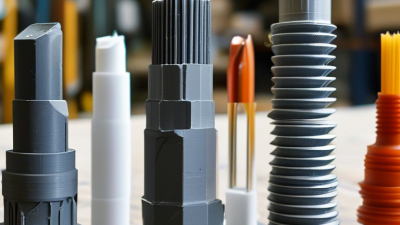
Top 10 Carbon Fiber 3D Printers for Global Buyers
Carbon fiber additive manufacturing is moving from specialist workshops into aerospace, automotive, robotics, and industrial production. Wohlers Associates reported that the global additive manufacturing industry reached approximately $20.035 billion in 2023, growing 13.5% year over year. This expansion reflects stronger demand for functional parts, not only visual prototypes. A Carbon Fiber 3d Printer can produce lightweight components with improved stiffness, dimensional stability, and heat resistance. However, results depend heavily on fiber length, material formulation, nozzle temperature, chamber control, and print orientation.
The global market now includes desktop systems, enclosed professional machines, and large-format industrial platforms. Reports from MarketsandMarkets and Grand View Research also identify composite materials as an important growth area within advanced manufacturing. Yet market forecasts should be read carefully. Definitions vary, and promotional claims sometimes blur the difference between chopped-fiber filament and continuous-fiber reinforcement. That distinction matters. A chopped carbon-fiber nylon bracket may improve rigidity, while a continuous-fiber laminate can deliver a different structural performance.
This guide compares ten carbon fiber 3D printers for global buyers. It considers build volume, thermal capability, material compatibility, software control, maintenance, safety features, and technical support. Real purchasing decisions also involve power standards, spare-part availability, training, and regional service response. A ranking cannot replace a production trial. It can, however, narrow the field.
Some conclusions remain imperfect. No printer is best for every factory, laboratory, or workshop. Buyers should validate strength, warping, surface quality, and repeatability using their own geometry and materials before committing to a large investment.
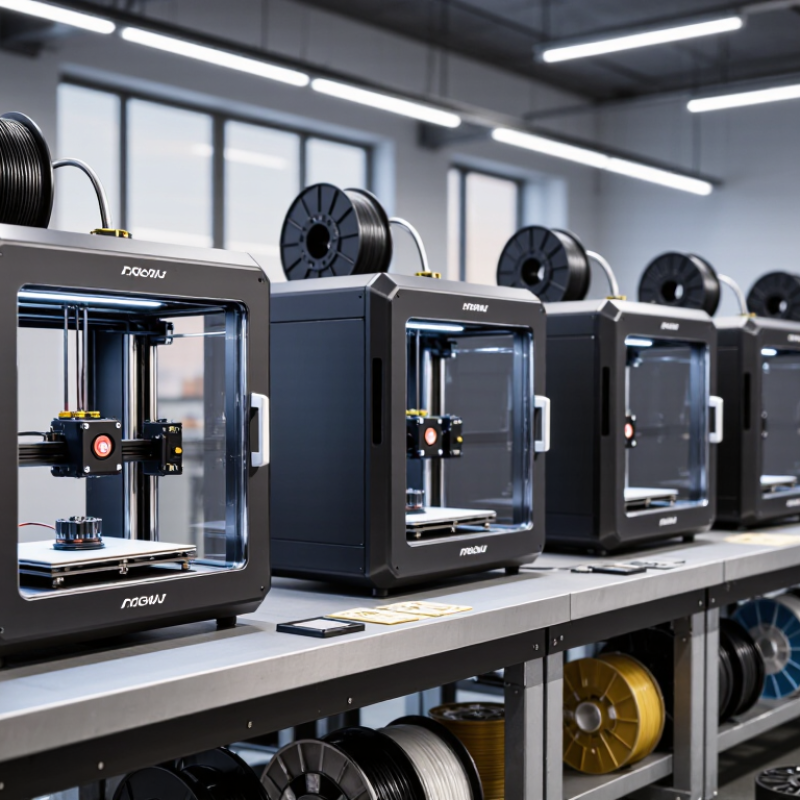
What Carbon Fiber 3D Printing Is and Why It Matters
Carbon fiber 3D printing combines a polymer matrix with short or continuous carbon fibers. The fibers improve stiffness, strength, and dimensional stability. This matters when a printed bracket must resist vibration, heat, or repeated loading. A lightweight part can feel surprisingly rigid in your hands.
However, carbon fiber does not make every part stronger in every direction. Short fibers usually follow the extrusion path, creating anisotropic performance. Continuous fiber systems can reinforce selected areas, but they require careful toolpath planning. In practice, poor layer bonding may weaken an otherwise impressive design. It is powerful, but not magic. Engineers should review load direction, wall thickness, infill, and environmental exposure before selecting a printer.
Tips: Check whether the printer supports abrasive-resistant nozzles and temperature control. Keep filament dry, because moisture can create bubbles and fragile layers. Ask for verified tensile data, not only attractive strength claims. A small test coupon can reveal more than a polished sample part. Global buyers should also examine service access, replacement-part availability, software compatibility, and local electrical requirements. My own cautious view is simple: carbon fiber printing rewards disciplined testing, yet real production conditions often expose weaknesses that laboratory samples hide. Even a successful prototype may need redesign after heat, torque, or long-term cycling.
Key Criteria for Comparing Carbon Fiber 3D Printers
Choosing a carbon fiber 3D printer requires more than comparing print speed or build volume. The fiber process matters. Chopped-fiber filament improves stiffness, while continuous-fiber systems can reinforce selected load paths. These methods are not interchangeable. Ask how the printer controls fiber direction, layer bonding, and fiber placement during real production.
Material compatibility deserves close inspection. Carbon fiber can accelerate nozzle wear, especially with abrasive compounds. A hardened nozzle may be essential, not optional. Check the heated bed, chamber temperature, and maximum extrusion temperature. These features affect warping, layer adhesion, and dimensional stability. A small test coupon can reveal more than a polished product brochure. Measure its strength, surface finish, and repeatability.
Software and calibration also shape daily results. Look for adjustable fiber paths, reliable bed leveling, and clear maintenance instructions. Global buyers should examine power requirements, spare-part access, training, and technical support in their region. Safety documentation and recognized electrical certifications should be verified locally. Do not judge value by the lowest purchase price. Nozzle replacement, drying equipment, failed prototypes, and operator time can change the calculation. My own comparison would include at least three repeated prints, because one successful sample proves very little. Even then, production conditions may expose weaknesses that testing missed.
| Rank | Printer Profile | Printing Process | Typical Build Volume | Carbon-Fiber Material Capability | Nozzle / Hotend Temperature | Chamber Type | Recommended Nozzle | Practical Print Speed | Typical Dimensional Accuracy | Best Fit for Global Buyers |
|---|---|---|---|---|---|---|---|---|---|---|
| 1 | Industrial Continuous-Fiber System | Material extrusion with continuous fiber placement | 300 × 250 × 200 mm | Nylon, PEKK or similar thermoplastic with continuous carbon fiber reinforcement | Up to 400°C | Heated chamber, typically up to 60–80°C | Hardened steel or carbide, 0.4–0.8 mm | 30–100 mm/s | About ±0.10–0.20 mm | High-strength brackets, tooling, jigs and lightweight end-use components |
| 2 | Large-Format High-Temperature FFF | Industrial fused filament fabrication | 500 × 500 × 500 mm | Carbon-fiber reinforced PA, PC, PEI or PEEK-class filament | Up to 500°C | Actively heated chamber, commonly 60–120°C | Hardened steel, ruby or carbide, 0.6–1.0 mm | 40–150 mm/s | About ±0.15–0.30 mm | Large industrial fixtures, ducts, covers and production aids |
| 3 | Enclosed Engineering-Grade FFF | High-temperature fused filament fabrication | 300 × 300 × 300 mm | Carbon-fiber nylon, PET-CF, PC-CF and ABS-CF | 300–400°C | Passive or actively controlled enclosure | Hardened steel, 0.4–0.6 mm | 50–180 mm/s | About ±0.10–0.25 mm | Professional prototyping and low-volume technical parts |
| 4 | Continuous-Fiber Desktop System | Dual-material extrusion with selective fiber reinforcement | 250 × 200 × 200 mm | Nylon or PLA matrix with continuous carbon-fiber strands | Up to 300°C | Enclosed, usually not actively heated | Hardened steel, 0.4–0.6 mm | 20–80 mm/s | About ±0.10–0.20 mm | Small, strong components where fiber is needed only in selected load paths |
| 5 | Professional Carbon-Fiber FFF | Enclosed fused filament fabrication | 250 × 250 × 250 mm | PA-CF, PC-CF, PET-CF and reinforced ABS blends | 280–350°C | Heated or thermally managed enclosure | Hardened steel, 0.4–0.8 mm | 40–150 mm/s | About ±0.10–0.25 mm | Engineering departments, service bureaus and functional prototypes |
| 6 | Open-Frame CF-Compatible Printer | Standard fused deposition modeling | 220 × 220 × 250 mm | PLA-CF, PETG-CF and selected low-warp nylon-CF filaments | 250–300°C | Open or lightly enclosed | Hardened steel, 0.4–0.6 mm | 50–200 mm/s | About ±0.10–0.30 mm | Education, maker spaces and cost-sensitive prototyping |
| 7 | Compact Enclosed Nylon-CF Printer | Enclosed FFF with filament drying support | 180 × 180 × 180 mm | Short-fiber nylon and high-strength PA-CF filaments | Up to 300°C | Enclosed, generally passive | Hardened steel, 0.4–0.6 mm | 30–120 mm/s | About ±0.10–0.25 mm | Small workshops producing durable brackets, housings and replacement parts |
| 8 | Pellet-Based Composite Extruder | Large-format pellet extrusion | 600 × 600 × 600 mm | Carbon-fiber reinforced pellets based on recycled or virgin thermoplastics | Up to 450°C | Optional heated chamber | Hardened steel or carbide, 1.0–3.0 mm | 20–80 mm/s | About ±0.30–0.80 mm | Large molds, patterns, architectural forms and industrial tooling |
| 9 | Carbon-Fiber Composite Resin Printer | Photopolymer resin printing with composite-filled resin | 140 × 80 × 160 mm | Carbon-filled or carbon-reinforced photopolymer resin | UV-curing process; no extrusion hotend | Temperature-controlled resin environment | Not applicable | 20–100 mm per hour, depending on layer height | About ±0.05–0.15 mm | Detailed prototypes, small fixtures and cosmetic engineering models |
| 10 | Entry-Level CF-Ready FFF Printer | Desktop fused filament fabrication | 200 × 200 × 200 mm | PLA-CF, PETG-CF and other low-temperature short-fiber filaments | 240–280°C | Open frame | Hardened steel, 0.4 mm | 40–150 mm/s | About ±0.15–0.30 mm | First-time buyers, basic fixtures and low-cost material evaluation |
Comparison data represents typical capabilities and operating ranges for anonymous carbon-fiber 3D printer categories. Actual results depend on material formulation, fiber loading, nozzle condition, chamber temperature, calibration, print orientation and part geometry.
Top Carbon Fiber 3D Printers for Different Buyer Needs
Carbon fiber 3D printers serve very different buyers. A workshop making lightweight brackets may need a compact enclosed printer, while an engineering team may require a larger build area and stable temperature control. For functional prototypes, prioritize dimensional accuracy, hardened nozzles, and reliable extrusion. Carbon fiber filament is abrasive. Standard brass nozzles can wear quickly and affect wall quality.
Small businesses should compare maintenance access, material compatibility, and software workflow. A heated build plate helps reduce warping, especially with nylon-based composites. An enclosed chamber can improve consistency around tall parts. For education, simple calibration and safe operation matter more than maximum speed. Production users should inspect repeatability, spare-part availability, and documented test results. A low purchase price can become expensive after frequent nozzle changes and failed prints.
Tips: Dry carbon fiber filament before printing, then store it in a sealed container with desiccant. Use a hardened nozzle and check its diameter regularly. Print a small tensile bar before producing a costly component. Measure it with calipers, not visual judgment. Real performance may disappoint. Fiber-filled parts can be stiff but brittle, and layer direction strongly affects strength. Buyer requirements should guide the choice, not impressive specifications alone.
Materials, Compatibility, and Printing Performance
Choosing among the top 10 carbon fiber 3D printers requires more than comparing advertised strength. Wohlers Report 2024 valued the global additive manufacturing industry at $20.035 billion in 2023, showing why material compatibility now matters to international buyers. A printer should process short-fiber nylon reliably, while continuous-fiber systems need accurate tension control, clean routing, and stable bonding.
Check the material data sheet carefully. Nylon offers impact resistance, but it absorbs moisture quickly. Polycarbonate tolerates heat better, yet it demands a controlled chamber and strong bed adhesion.
Carbon-filled polymers can abrade standard nozzles within weeks. Hardened steel or carbide tooling is safer. Small details matter. Poor drying can create bubbles, weak layers, and rough surfaces.
Printing performance also depends on temperature stability, chamber airflow, calibration, and software control. ISO/ASTM 52900 provides common additive manufacturing terminology, but it does not guarantee part quality. Buyers should request tensile data, layer-bond results, and repeatability records from independent testing.
One uncomfortable point remains: published strength values often use ideal settings and simple specimens. Real parts contain holes, corners, and changing fiber directions.
A slower print may outperform a faster machine in production. I would test three identical parts before approving any purchase.
How Global Buyers Can Select and Purchase the Right Printer
Top 10 Carbon Fiber 3D Printers for Global Buyers
Choosing a carbon fiber 3D printer starts with the part, not the product page. Wohlers Report 2024 valued the global additive manufacturing industry at $20.035 billion in 2023. That growth increases choice, but also increases purchasing risk. Define load direction, heat exposure, accuracy, and monthly production volume before comparing machines. A bracket needing stiffness may require continuous fiber. A complex housing may perform better with chopped fiber. They are not interchangeable.
Inspect the complete process. Ask whether the printer controls filament drying, chamber temperature, nozzle wear, and fiber placement. Request test parts using your actual geometry. Measure warpage beside a steel ruler. Check layer bonding after thermal cycling. Short trials reveal more than polished demonstrations. They also expose inconvenient limits. I learned this late.
Global buyers should calculate total cost, including spare nozzles, drying equipment, software, freight, import duties, training, and service delays. ISO/ASTM 52900 terminology can improve communication with suppliers and engineering teams. Require documented calibration procedures and traceable material data. A low purchase price can become expensive when replacement parts cross borders. Check electrical standards and local safety requirements before payment. Ask for a written warranty, response times, and remote-support coverage. Keep production files protected, especially when suppliers request cloud access. No checklist is perfect. Reassess the choice after producing several hundred parts.
Related Posts
-
Top 2026 3D Printing Materials for Global Buyers Guide?
-
The Future of Additive Manufacturing: Unlocking Potential with the Best Carbon Fiber 3D Printers
-
How to Choose the Right Industrial 3D Printer for Your Business Needs
-
How to Choose the Best Big 3D Printer for Your Needs?
-

Top Tips for Sourcing Quality 3D Printed Parts Globally?
-
Digital Guide to Crafting the Best 3D Printed Parts Efficiently