7 Best Professional 3D Printers for Business in 2026

Choosing a Professional 3d Printer for business is less about chasing the largest build volume than matching a machine to real work. An engineering team may need accurate prototypes and repeatable dimensions. A product studio may value smooth surfaces, while a workshop may prioritize durable jigs, fixtures, and replacement parts. Those jobs place different demands on a printer. Small details matter.

This guide looks at seven professional 3D printers for business in 2026, comparing the features that affect day-to-day use. These include build volume, material compatibility, print consistency, software workflow, maintenance needs, and available support. A heated enclosure can help with certain engineering materials. A simple setup process can save valuable staff time. Neither feature is useful in every workplace, though.

No machine is perfect. A polished specification sheet may not show how much calibration a job requires, or how a printer fits into an existing production workflow. This overview is intended to help businesses ask better questions before investing—not to replace a material test or a review of current manufacturer specifications. Check the exact configuration, operating costs, and service options before deciding. The right choice should suit your team’s actual parts, schedule, and skill level. And sometimes, the best printer is not the most impressive one; it is the one your team can use reliably.
7 Best Professional 3D Printers for Business in 2026

Define Business Needs Across ISO/ASTM 52900’s Seven AM Process Categories

A business should choose a 3D printer by the part it needs to make, not by a machine’s brochure. ISO/ASTM 52900:2021 defines seven additive manufacturing categories. Material extrusion suits practical polymer parts and fixtures. Vat photopolymerization makes detailed parts with smooth surfaces, but resin handling and post-curing add work. Material jetting can produce fine features and multiple material properties. Powder bed fusion supports complex parts without conventional support structures. Directed energy deposition is useful for adding material to existing components. Binder jetting can produce batches, while sheet lamination builds parts from bonded layers. Each process has limits.

That matters. Wohlers Report 2024 estimated the global additive manufacturing industry reached $20.0 billion in 2023, an 11.1% increase over 2022. Market growth does not guarantee a sound investment for any one company. Compare usable build volume, material cost, cycle time, dimensional tolerance, and operator workload against real jobs. For example, a production team making small polymer brackets may value predictable output over exceptionally fine detail. A shop repairing large metal parts may need a different process entirely. Test representative parts, including awkward geometries and repeat builds. The result may be less impressive than a brochure—and more useful for budgeting.

Compare Seven 2026 Printers by Build Volume, Materials, Accuracy, and Throughput

A strong 2026 business shortlist should compare seven professional printers using the same test part, not marketing claims. Build volume sets the practical limit: a 250-millimeter cube may fit a fixture, while taller parts need more Z-axis capacity. Larger chambers can reduce part splitting, but they also take up floor space. Measure the real work area. Check whether the machine can print several components together without crowding.

Materials shape the next decision. Compare supported polymers, resins, or powders against the heat, wear, and chemical exposure parts will face. A wide material list is useful only when profiles and drying guidance are dependable.

Accuracy needs context, too. Ask for repeatability data and inspect small holes, mating faces, and a thin-walled feature from sample prints. Numbers alone can mislead. A part that measures well once may still vary between batches.

Throughput means finished, usable parts per shift—not the fastest setting on a screen. Include setup, cooling, support removal, and failed builds in the comparison.

For each of the seven candidates, record build volume, material options, dimensional performance, and expected output under the same workload. A printer that runs overnight but needs frequent intervention may slow a small team.

Some trade-offs remain awkward. Check service access and calibration steps before purchase; specifications rarely show the full daily burden.

Evaluate Cost per Part, Machine Utilization, and Post-Processing Requirements

A professional 3D printer’s purchase price says little about its cost per part. Include material, labor, failed builds, maintenance, energy, and post-processing. Then divide by usable parts, not parts started. A build may look full on screen yet yield only a few saleable components. Small details. Track actual machine hours against scheduled hours, and record changeovers, repairs, and idle time. The Wohlers Report 2024 estimated the global additive manufacturing industry reached $20.0 billion in 2023, growing 11.1% year over year. That growth signals wider adoption, but it does not guarantee savings for any particular shop.

Compare machines using the same part, material, batch size, and quality criteria. A faster build can still lose on cost if operators spend hours removing supports, sanding surfaces, or checking dimensions. Post-processing is part of the production route. Ask vendors for sample parts and time each finishing step with your own staff. Then calculate cost per accepted part at realistic utilization, including low-demand weeks. This estimate may feel less impressive. It is usually more useful. A spreadsheet should separate machine time from hands-on labor; otherwise, labor quietly disappears from the comparison. Revisit the numbers after several production runs, because scrap rates and finishing times often differ from early estimates.

7 Best Professional 3D Printers for Business in 2026 — Evaluate Cost per Part, Machine Utilization, and Post-Processing Requirements
Rank Professional Printer Class Best Business Use Typical Build-Envelope Range Indicative New-System Budget (USD) Illustrative Consumables Cost per 100 g Part Practical Utilization Planning Target Post-Processing Requirements Key Cost or Workflow Consideration
1 Industrial FFF / FDM Jigs, fixtures, housings, large prototypes, and low-volume functional parts About 300–1,000 mm per axis, depending on configuration $10,000–$100,000+ $3–$30 30–60% of scheduled production time Support removal; optional sanding, machining, or annealing; soluble supports may require washing Usually economical for larger polymer parts. Material, support use, print speed, and operator labor strongly affect cost.
2 Industrial SLA Detailed prototypes, visual models, master patterns, and smooth-surface parts About 150–800 mm per axis $20,000–$200,000+ $15–$80 25–55% of scheduled production time Drain and remove supports, wash, and UV post-cure; finishing may be needed for cosmetic parts Fine detail and surface quality can reduce finishing effort, but resin handling, washing, and curing add workflow steps.
3 Industrial SLS Durable nylon parts, nested production batches, and complex geometries without dedicated supports About 200–700 mm per axis $100,000–$500,000+ $5–$40 40–70% of scheduled production time Cool the powder bed, unpack parts, remove loose powder, and often bead-blast or dye parts Batch packing can improve economics. Powder refresh rules, refresh ratio, cooling time, and unsold capacity affect cost per part.
4 Polymer powder-bed fusion (MJF-type process) Repeatable production of functional nylon parts in medium-to-high batch volumes About 300–400 mm per axis $250,000–$700,000+ $8–$45 45–75% of scheduled production time Powder removal and cleaning; optional bead-blasting, vapor smoothing, or dyeing Economics depend on packing density, batch size, powder reuse policy, and the cost of auxiliary equipment.
5 Professional DLP Small, highly detailed parts, dental or jewelry workflows, and repeatable resin production About 100–300 mm per axis $5,000–$100,000+ $10–$70 25–60% of scheduled production time Wash, remove supports, and UV cure; validate material-specific handling and finishing steps High detail and batch printing can be advantageous for small parts; resin compatibility and labor per build matter.
6 Metal laser powder-bed fusion (LPBF) Complex metal parts, lightweight components, and specialized low-volume production About 100–500 mm per axis $500,000–$2,000,000+ $50–$300+ 30–60% of scheduled production time Powder handling and recovery, support removal, stress relief, and commonly machining or other finishing Part cost includes more than powder: build preparation, inert-gas operation, post-processing, inspection, and safety controls can be substantial.
7 Metal binder jetting Batch production of metal components where furnace processing and suitable part design are available About 100–400 mm per axis $300,000–$1,500,000+ $30–$200+ 35–65% of scheduled production time Depowder, cure or handle the green part, debind, sinter, and often finish-machine or inspect Build speed and nesting can support batch economics, but shrinkage control, furnace capacity, and sintering yield are critical.
How to interpret these figures: These are broad, brand-neutral planning ranges, not quoted prices or measured market averages. System budgets vary with build volume, software, installation, service, and required accessories. Per-part figures are illustrative consumables estimates for a 100 g finished part and exclude labor, machine depreciation, facility costs, failed builds, and most post-processing. Utilization targets are operational planning assumptions—not guaranteed uptime or industry benchmarks. Obtain process-specific quotations and run a representative-part cost study before purchasing.

Check Production Readiness Against ISO/ASTM 52920 Qualification Principles

7 Best Professional 3D Printers for Business in 2026

ISO/ASTM 52920 qualification principles offer a useful lens for judging production readiness. They shift attention from headline speed to the full manufacturing process. A printer is only one part of that process. Review the organization, equipment, materials, personnel, and controls used to make each build repeatable. Check whether operators follow documented procedures and know how to respond when a build drifts from its approved parameters.

Small details matter. A powder log, resin storage record, or maintenance entry can reveal gaps that a polished sample part will not.

For each printer under consideration, ask how builds are identified, monitored, and traced from job file to finished part. Look for recorded process settings, equipment checks, material lots, operator actions, and post-processing steps. Confirm that inspection methods suit the part’s intended use, and that deviations lead to documented review rather than guesswork.

A tidy checklist can still miss what happens on a busy shift; observe the workflow if possible. No score tells the whole story. Qualification depends on scope and application, so map the principles to your actual production needs instead of treating them as a universal pass-or-fail label.

Match Top Systems to Prototyping, Tooling, and End-Use Production

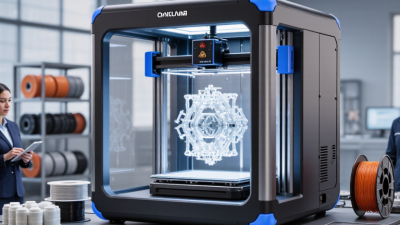
A professional 3D printer should fit the job, not just produce impressive samples. For prototyping, prioritize quick material changes, dependable dimensional accuracy, and a build area that fits real components. A clear enclosure helps teams inspect parts during a run. So does a repeatable calibration routine. For example, a product team testing a snap-fit housing needs consistent clips, not merely a smooth-looking outer surface.

Tooling demands different strengths. Jigs, fixtures, and checking gauges must hold their shape under repeated handling. Consider materials, heat exposure, and the forces applied during assembly. A printer with a heated chamber can help control warping in demanding polymers, but it may add operating complexity. A mismatch is costly. Measure the fixture’s critical features and test a small sample before committing to a full set.

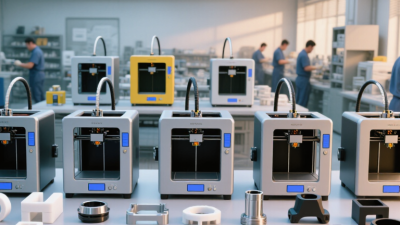
End-use production calls for process control as much as print speed. Look for documented material settings, traceable job records, and maintenance procedures that operators can follow. Estimate usable output after failed builds, support removal, and inspection—not from the advertised cycle time alone. A farm of compact systems may suit varied low-volume parts; a larger machine may better serve repeat orders. The trade-off is rarely obvious. Even a capable printer can disappoint when post-processing becomes the bottleneck. Teams should compare finished-part cost and consistency across several production runs before choosing a system.