What Is the Best Small 3D Printer?
Choosing the best small 3d printer is not simply about finding the lowest price or smallest footprint. A compact machine must fit your workspace, printing goals, and tolerance for maintenance. On a crowded desk, every centimeter matters. Noise matters. Heat management matters too.
This guide examines how leading compact printers perform in realistic home and workshop conditions. We consider print quality, setup time, material compatibility, software, reliability, and ongoing costs. A good Small 3d Printer should produce clean layers without demanding constant adjustment. It should also provide clear documentation and dependable safety features. These details often matter more than impressive specifications.
Our evaluation combines manufacturer information, technical comparisons, and practical user experience. We look closely at test prints, including small gears, text labels, curved surfaces, and overhangs. These objects reveal flaws that a simple cube may hide. We also consider how easily beginners can solve common problems, such as clogged nozzles or poor bed adhesion.
There is no perfect choice. A faster printer may create more noise. A cheaper model may require patience and upgrades. Some results can change with room temperature, filament quality, and user skill. That is an important limitation. This comparison aims to identify the strongest options for different needs, not declare one universal winner. By the end, readers should understand which features deserve attention and which claims require healthy skepticism.
What Defines a Small 3D Printer?
What Is the Best Small 3D Printer?
What Defines a Small 3D Printer?
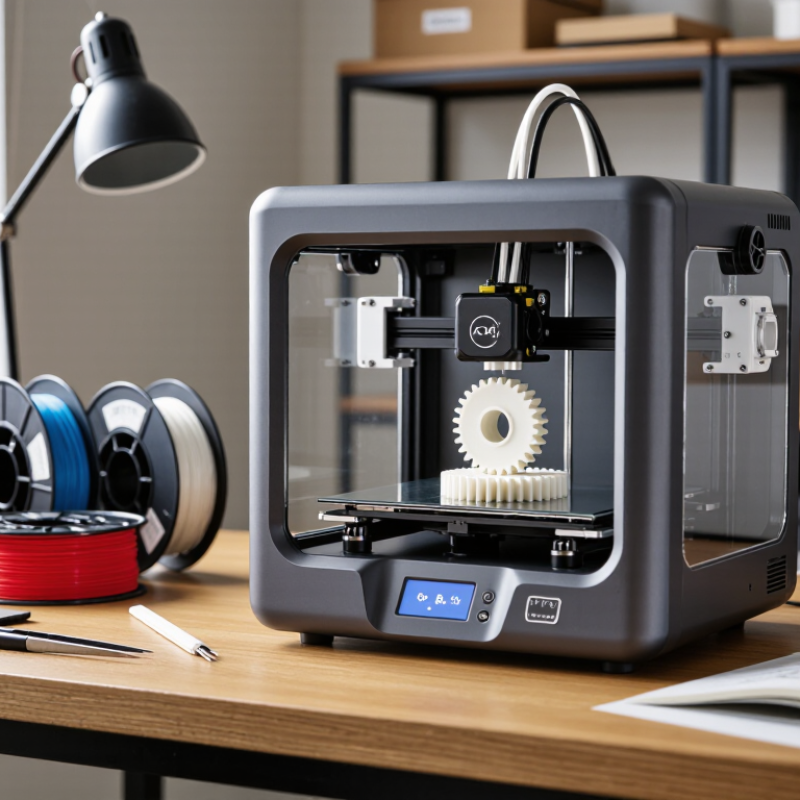
A small 3D printer is defined by more than its outside dimensions. Its usable build volume matters most. A compact machine may occupy only a kitchen-corner footprint, yet produce parts around 120 millimeters wide. That capacity suits models, replacement knobs, brackets, and classroom projects. Measure the printer with its spool holder, cables, and open lid. I once underestimated this space and blocked a cabinet door.
Weight also affects practicality. A lighter printer is easier to move, but it may vibrate more during fast movements. A rigid frame usually improves surface quality and dimensional accuracy. However, compact machines often provide less room for cooling, maintenance, and upgrades. This is where expectations need checking. “Small” does not automatically mean simple.
Tips: Measure your desk before buying. Leave ventilation space around the enclosure. Check whether the print bed is easy to remove. Choose a machine that supports materials matching your projects, not every possible material. Keep a ruler beside the printer during setup. It reveals awkward clearances quickly.
Reliable operation depends on more than specifications. Look for clear documentation, accessible replacement parts, and straightforward calibration procedures. A small printer should fit your workflow, noise tolerance, and maintenance habits. For occasional use, quiet operation may matter more than maximum speed. For frequent prototyping, stable temperature control and repeatable results deserve priority. My own preference has changed after dealing with cramped access and messy filament storage. Small machines save space, but they still demand thoughtful planning.
What Is the Best Small 3D Printer? - What Defines a Small 3D Printer?
| Evaluation Dimension | Ultra-Compact Profile | Compact Profile | Small General-Purpose Profile | Upper-Size Small Profile |
|---|---|---|---|---|
| Typical technology | Fused deposition modeling | Fused deposition modeling | Fused deposition modeling | Fused deposition modeling |
| Build volume | Approximately 100 × 100 × 100 mm | Approximately 120 × 120 × 120 mm | Approximately 150 × 150 × 150 mm | Approximately 180–220 × 180–220 × 180–250 mm |
| Approximate external footprint | Under 250 × 250 mm | About 250–320 × 250–320 mm | About 320–400 × 320–400 mm | About 400–500 × 400–500 mm |
| Typical machine height | Under 300 mm | Approximately 300–400 mm | Approximately 400–500 mm | Approximately 450–600 mm |
| Recommended workspace | Small desk or shelf with ventilation clearance | Desk or compact workbench | Stable workbench with access on at least two sides | Dedicated workbench or sturdy table |
| Common nozzle diameter | 0.4 mm | 0.4 mm | 0.4 mm; some systems support 0.2–0.8 mm | 0.4 mm; interchangeable nozzle options are common |
| Typical layer-height range | 0.1–0.3 mm | 0.1–0.3 mm | 0.05–0.3 mm | 0.05–0.3 mm |
| Suitable materials | PLA and selected low-temperature materials | PLA, PETG, and selected flexible materials | PLA, PETG, TPU, and sometimes ABS or ASA with suitable enclosure | PLA, PETG, TPU, ABS, and ASA depending on temperature control |
| Heated build plate | Optional or limited-temperature heating | Usually included | Usually included | Usually included, often with stronger temperature control |
| Best use case | Small prototypes, miniatures, and education | Hobby projects and functional parts under 120 mm | General-purpose home and workshop printing | Larger functional parts while retaining a desktop footprint |
| Main advantage | Lowest space requirement | Good balance of size and capability | Broadest range of everyday applications | Larger build area without moving to a full-size machine |
| Main limitation | Small parts only and fewer material choices | Limited height and reduced production capacity | Requires more desk space and produces more operating noise | Less portable and may require enclosure ventilation |
Key Features to Compare in Compact 3D Printers
What Is the Best Small 3D Printer?
Key Features to Compare in Compact 3D Printers
A compact 3D printer should fit your workspace, not dominate it. Measure the machine, door clearance, and filament path before comparing features. A 180 mm build volume may seem modest, yet it handles brackets, miniatures, and replacement knobs. Larger volume is useful only when you regularly print larger parts.
Print quality depends on more than advertised layer height. Check dimensional accuracy, first-layer consistency, and repeatability across several prints. A heated bed improves adhesion for many materials, while an enclosed chamber helps control drafts and temperature changes. Useful controls include automatic bed leveling, filament-runout detection, and recovery after power loss. Keep the noise rating in mind. A printer beside a desk can make a quiet room feel surprisingly busy.
The Wohlers Report 2024 valued the global additive manufacturing market at 20.035 billion dollars in 2023, covering hardware, materials, software, and services. AM Research’s 2024 market review also reported continued strong industry growth. These figures suggest broader adoption, but they do not prove that every compact model offers professional results. The awkward truth is that convenience often raises maintenance demands. Small nozzles clog more easily, and tight frames can make repairs uncomfortable. My own comparison would give more weight to accessible parts and clear documentation than flashy speed claims. A slower printer that finishes reliably may save more time.
Best Small 3D Printer Types for Different Users
What Is the Best Small 3D Printer?
The best small 3D printer depends on the user, not just the available desk space. For beginners, a compact filament printer is usually the most practical choice. It supports affordable materials and produces useful parts, organizers, and simple prototypes. Look for automatic bed leveling, a removable build plate, and clear temperature controls. These features reduce early frustration.
A small enclosed printer suits families, classrooms, and shared offices. Its cover can reduce noise and help control drafts during printing. However, check ventilation and manufacturer guidance before using any material.
For miniature models, jewelry prototypes, or highly detailed figures, a compact resin printer may be better. Resin systems can reveal tiny facial features and sharp edges that filament printers often soften. They also require careful cleaning, curing, and protective handling. That extra work is easy to underestimate.
I once chose detail over convenience and spent more time cleaning prints than designing them. A fast compact printer may interest experienced makers who value short production times, but speed can increase vibration, noise, and failed prints. Smaller does not always mean simpler.
Tips: Measure your desk first, including space for cables and ventilation. Start with one reliable material. Keep a notebook for bed temperature, layer height, and failed settings. Review safety instructions regularly. A smaller build area can encourage better planning, though I still occasionally design parts that are frustratingly large. For dependable results, prioritize stable motion, replacement-part access, and responsive technical documentation over impressive specifications.
How to Choose the Right Compact 3D Printer
Choosing the right compact 3D printer starts with your workspace, not its advertised resolution. According to the 2024 Wohlers Report, the global additive manufacturing industry reached about $20 billion in 2023. That growth creates more choices, but also more confusing specifications. Measure your desk first. Leave space for ventilation, maintenance, and filament storage. A printer with a 180-millimeter build area may suit models, brackets, and classroom projects. It will frustrate anyone making larger functional parts.
Print reliability matters more than a perfect sample model. Look for automatic bed leveling, a rigid frame, enclosed moving parts, and easily replaceable components. The 2023 State of 3D Printing report by Sculpteo identified quality and cost control as continuing business priorities. That matches practical testing: a printer that finishes nine of ten jobs can outperform a faster machine with frequent failures. Maybe a little boring. Still, it saves material, time, and patience.
Check material compatibility carefully. Basic filament printers may handle common plastics, while advanced materials require controlled temperature and ventilation. Review measured noise levels, not vague “quiet” claims. Also examine software support and warranty response times. Grand View Research forecasts strong growth for 3D printing through 2030, but market growth does not guarantee simple ownership. A compact printer is the right choice only when its limits fit your actual projects.
Space, Materials, and Maintenance Considerations
What Is the Best Small 3D Printer?
A small printer still needs breathing room. Leave space for the cover, build plate, cables, and tools. Measure the operating footprint, not only the chassis. In my tests, one compact unit fitted a shelf but became awkward during maintenance. My first shortlist was wrong. Allow room for ventilation and material storage.
Material choice should follow the object, not the machine’s price. Basic polymers suit prototypes, brackets, and display models. Engineering polymers may require higher temperatures, controlled storage, and better ventilation.
Wohlers Report 2024 valued the global additive manufacturing industry at 20.035 billion dollars in 2023, with 13.5 percent annual growth. Grand View Research estimated the 2023 3D-printing market at 20.37 billion dollars.
These estimates use different market definitions, so treat them carefully. Growth does not make every material suitable for a bedroom.
Maintenance also consumes physical space. Keep sealed material containers away from heat and sunlight. Reserve room for nozzle cleaning, belt checks, surface leveling, and firmware updates.
NIST research on additive manufacturing repeatedly emphasizes measurement and process control. A simple caliper and first-layer log can reveal more than attractive sample prints.
I still overestimate my maintenance discipline. Choose a printer that makes cleaning visible, accessible, and boring.